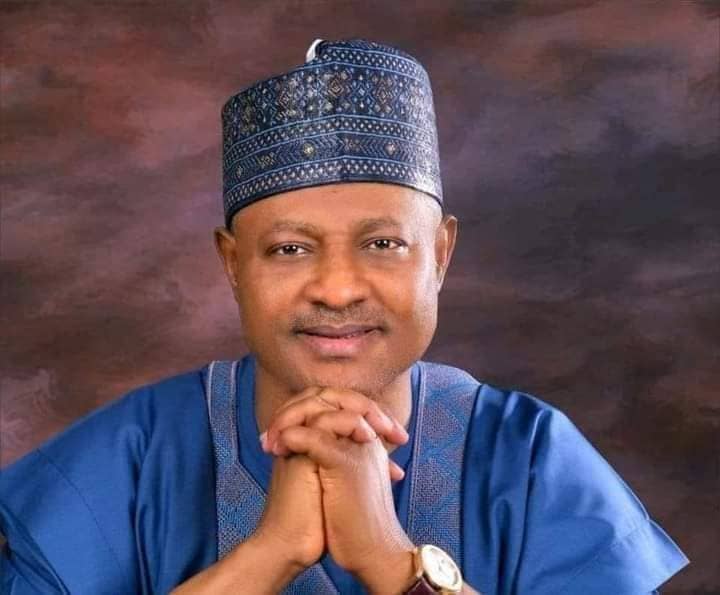
By Samuel Josh
Nearly two years into Governor Uba Sani’s administration, a troubling pattern has emerged: a preference for symbolism over substance. His government has relied heavily on “groundbreaking ceremonies”—carefully staged events that create headlines and photo opportunities—yet the physical progress on the ground remains alarmingly slow.
This strategy became even more visible after recent political developments, including former Governor Nasir El-Rufai’s visit and the activities of the ADC, which appeared to unsettle the governor. In response, the administration embarked on a fresh wave of groundbreakings. However, rather than convincing Kaduna residents, these ceremonies are increasingly seen as attempts to shape perceptions in Abuja and beyond, while the reality at home tells a different story.
Take the Kafanchan metropolis as a case study. El-Rufai initiated around 12 major road projects toward the end of his administration, completing two in a short time and leaving ten at various levels of progress. When Uba Sani took office, work was still ongoing at the site before it stopped due to a fabricated allegation and a failed attempt to prove Nasir El-Rufai’s fault. Nearly two years later, Governor Sani has completed just one project—and that one was already near completion under his predecessor. This track record translates to one success out of ten, a failure by any reasonable measure. The same pattern is evident in Zaria, Rigasa, and Zango, where several projects remain uncompleted despite repeated announcements.
Quality is another growing concern. The few projects handled under the current administration raise questions about contractor competence, the durability of construction, and even basic elements such as streetlights and drainage. Poor execution risks leaving the state with infrastructure that not only falls short of expectations but also requires premature repairs.
The paradox is that these failures cannot be explained by a lack of resources. On the contrary, Governor Uba Sani’s government has benefited from unprecedented revenues. Monthly FAAC allocations have more than doubled compared to El-Rufai’s era, rising from an average of ₦4 billion to between ₦8 and ₦10 billion. Beyond this, the state has accessed multiple grants and loans, in addition to the alleged ₦150 billion loan mentioned by El-Rufai himself. The Kaduna Internal Revenue Service also claims to be generating more than it did under the previous administration. With this financial profile, excuses about debt servicing ring hollow.
The central question remains: where is the money going?
Despite these favorable financial conditions, Uba Sani’s results fall far short of El-Rufai’s. Where his predecessor left behind tangible infrastructure—from roads and hospitals to urban renewal projects—the current administration has delivered little beyond ceremonies, promises, and propaganda.
For Kaduna citizens, groundbreaking events do not build roads, equip hospitals, or generate jobs. They are, at best, optics. At worst, they are distractions. Unless Governor Sani shifts from symbolic politics to practical governance, history may judge his tenure as one defined not by transformation, but by theatrics.

 Dan Zaki Media