
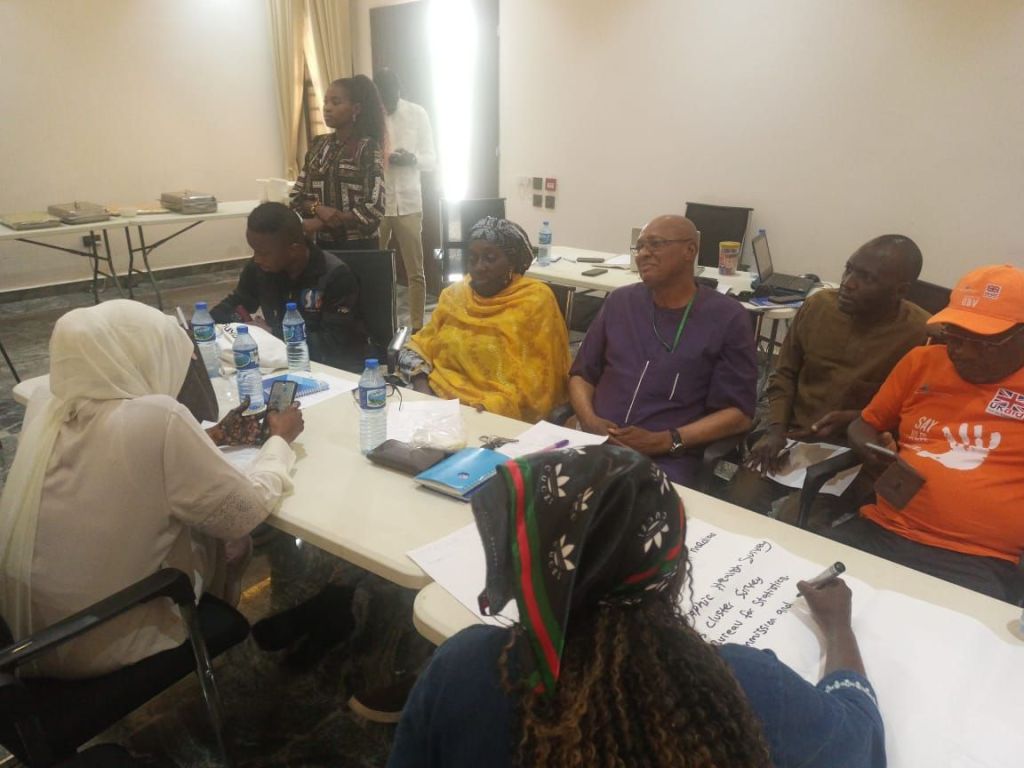
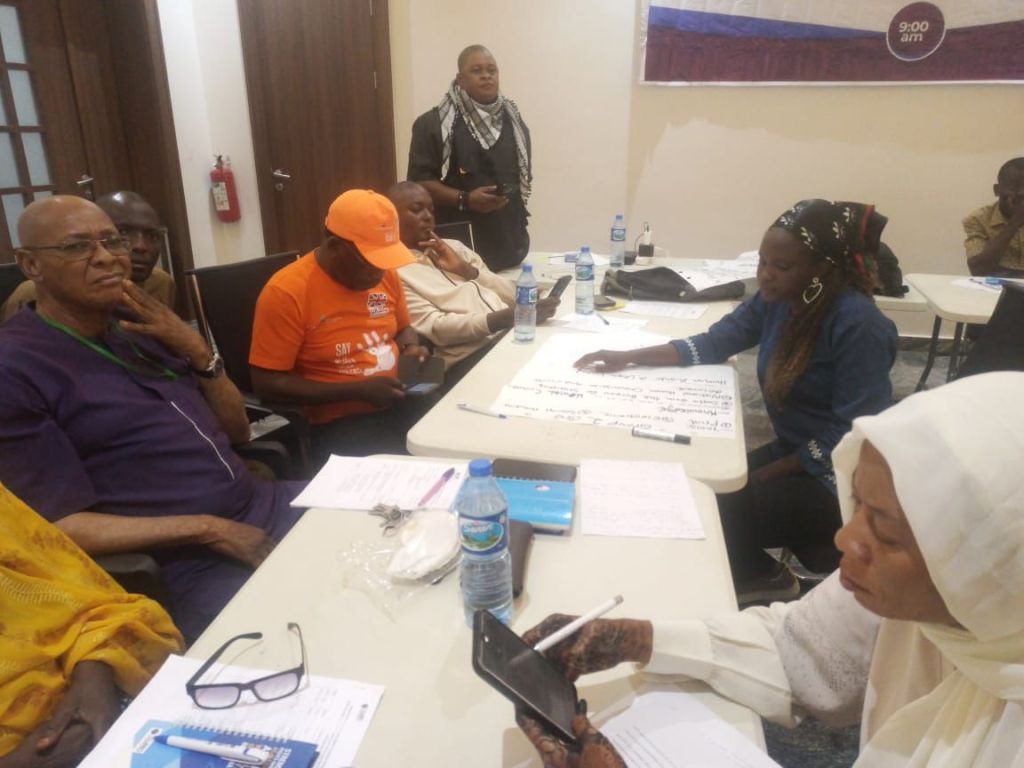
The CLEEN Foundation on Tuesday opened a three-day media workshop in Kaduna aimed at strengthening journalists’ capacity to report on human rights protection, the implementation of the Administration of Criminal Justice Law (ACJL), and advancing issues of Women, Peace and Security (WPS) across implementing states.
The Executive Director of CLEEN Foundation, Peter Maduoma, represented by Christiana Lawrence, welcomed participants and described the workshop as a crucial step toward improving justice sector accountability and promoting gender-responsive governance. The event, holding from December 9–11 at City Den Hotel, brings together journalists, researchers, policymakers and members of state working groups.
Maduoma said the training is part of the organisation’s project, “Strengthening Rights-Based Approach to ACJA Frameworks and Advancing Women, Peace and Security in Nigeria,” which seeks to address persistent gaps in justice delivery and the inclusion of women in governance and security processes.
He noted that despite the passage of the Administration of Criminal Justice Act (ACJA) in 2015 and its adoption by many states as the ACJL, implementation remains uneven. According to him, journalists play a decisive role in bridging this gap through accurate reporting, public enlightenment, and holding institutions accountable.
“Our goal is to build your capacity on human rights protection through adequate ACJL and WPS reporting, share insights from our state engagements, and gather your perspectives on how justice actors can be held more accountable,” he said.
He added that the project has already carried out baseline assessments, strengthened the capacity of justice stakeholders, set up state working groups, and inaugurated multi-stakeholder committees to monitor WPS implementation. He expressed optimism that the workshop and policy brief dissemination would support policymakers to improve justice delivery and advance the WPS agenda.
Maduoma thanked the Royal Norwegian Embassy for funding the project and commended researchers and partners for their continued support.
Kaduna ACJL Working Group Calls for Stronger Media Partnership
Delivering a goodwill message, Chairman of the Kaduna State ACJL Working Group, Dr. Terngu Gwar, praised CLEEN Foundation for convening what he described as a “multi-dimensional engagement” on human rights, gender inclusion, peace and security.
Gwar stressed that the ACJL is one of the most transformative reforms in Kaduna’s justice system as it eliminates delays, protects suspects, victims and witnesses, and strengthens transparency. But he warned that the success of the legislation ultimately depends on public awareness—an area where the media remains indispensable.
“Journalists are the bridge between policy and the people. Through ethical and human rights-centred reporting, the media strengthens accountability and ensures that state and non-state actors uphold their obligations,” he said.
He also highlighted the importance of women’s leadership in peace and governance processes, noting that global evidence shows societies become safer and more inclusive when women actively participate in decision-making. The media, he said, has the power to “challenge stereotypes and promote narratives that advance gender equality.”
Gwar pledged the commitment of the ACJL Working Group to collaborate with journalists by providing access to information and technical clarifications to enhance accurate reporting on justice system reforms.
Media Needs Deeper Knowledge of Justice Reform — NUJ Chairman
The Chairman of the Kaduna State Council of the Nigeria Union of Journalists (NUJ), Abdulgafar Alabelewe, also delivered remarks, describing the training as “timely and important.”
He noted that journalists in Nigeria are overstretched due to competing demands from the security, political, economic and social sectors, making it difficult for many to specialise or develop deep expertise in justice administration.
“Before journalists can effectively report on any sector, we must first deepen our knowledge of the subject matter,” Alabelewe said. He added that gaps in understanding often limit the depth and quality of justice-sector reporting.
He stressed that the media has a social responsibility to empower citizens and ensure the vulnerable receive justice. Many detainees in Nigeria, he said, remain behind bars not because they are guilty but because their rights were not protected.
Alabelewe assured that the NUJ Kaduna Council is committed to partnering with the ACJL Working Group and CLEEN Foundation, emphasising that journalists are ready to investigate and highlight issues—but stakeholders must bring these matters to their attention.
As the workshop continues, participants are expected to engage in technical sessions on human rights principles, ACJL reporting, gender-responsive governance, and the WPS agenda.

 Dan Zaki Media