Mishack Musa
The House of Justice has issued a global call for governments to accurately define large-scale violent crimes as terrorism or genocide where applicable. It warned that failing to properly name such atrocities undermines accountability and empowers perpetrators.
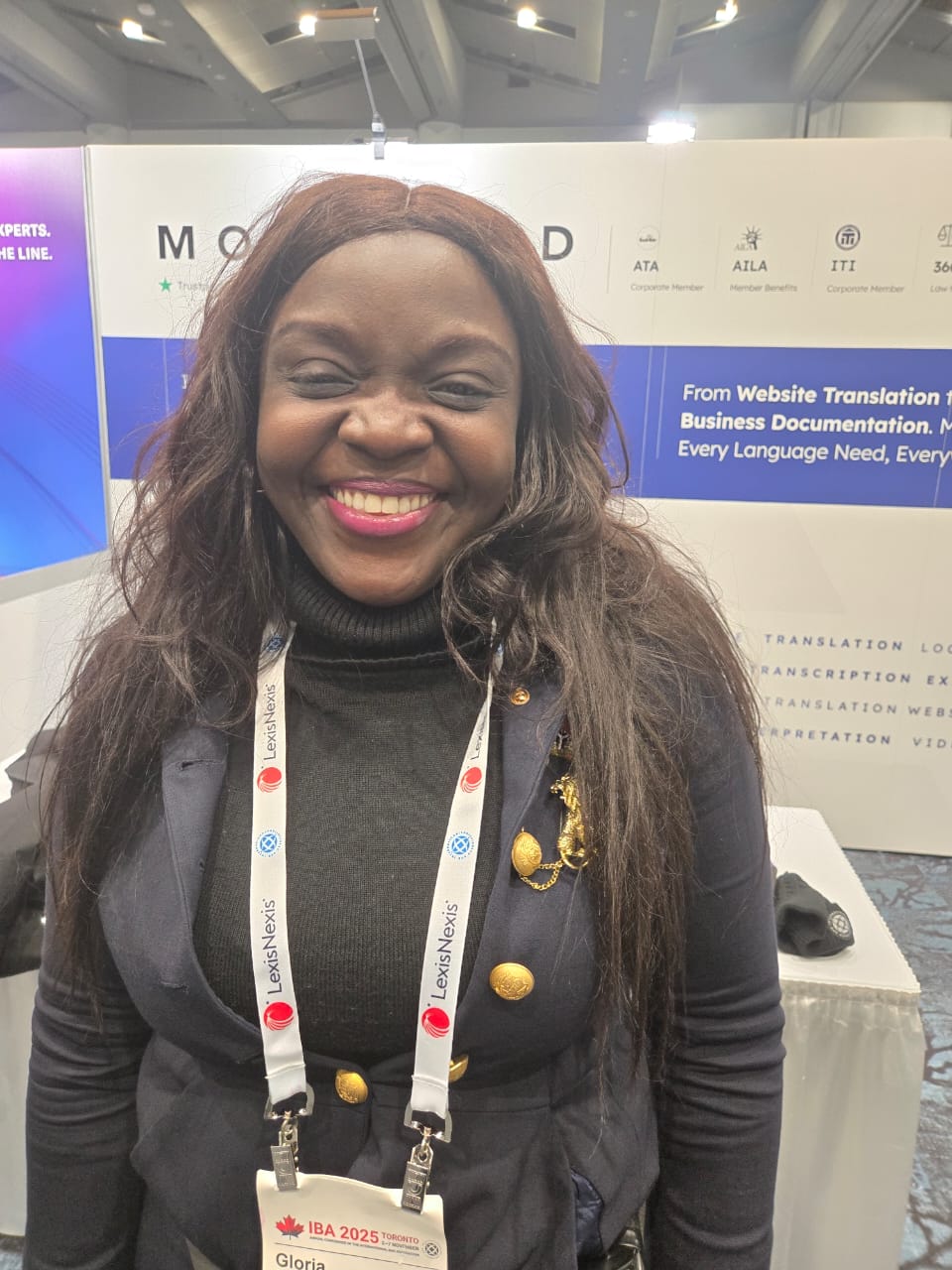
The appeal was delivered by the Founder and CEO of the House of Justice, Barrister Gloria Mabeiam Ballason, during her address at the 2025 International Bar Association (IBA) Conference in Toronto, Canada.
Drawing parallels between ongoing violence in Nigeria and the Sahel region, Ballason cited French revolutionary Maximilien de Robespierre’s observation that while individual murder is prosecuted, mass killings often lead to negotiations instead of justice. She expressed dismay that terrorism and war crimes persist in the 21st century despite available legal tools for prevention and accountability.
Speaking at a session attended by prominent legal figures such as Nigeria’s Dr. Babatunde Ajibade, SAN, Ballason stated that the primary goal must be to prevent war and terrorism altogether. She emphasized that post-conflict justice cannot undo the irreversible harm inflicted on lives, communities, and national resources.
Ballason elaborated on “psychic numbing”—a phenomenon where state accountability weakens as atrocities escalate, especially when crimes cross political lines or fall outside standard legal categories. This imbalance, she argued, allows large-scale crimes to go unpunished and leaves victims without redress.
The House of Justice aims to mobilize the public to overcome fear, confront despotism, and demand criminal sanctions against officials responsible for mass casualties, whether by direct action or negligence. Ballason stressed that public outrage over injustice must be channeled into sustained pressure for accountability.
She clarified that governments have a duty to correctly characterize conflicts. Violence intended to intimidate populations or governments for political, religious, or ideological ends should be termed terrorism, not mislabeled as communal or farmer-herder clashes. Similarly, situations meeting the legal criteria for genocide must be identified as such, avoiding any tendency to minimize or “sugar-coat” grave crimes.
Since 2014, Ballason noted, the House of Justice has pursued accountability for terrorism and mass atrocities through litigation, advocacy, and petitions aimed at barring alleged enablers and sponsors of terrorism from public office. She referenced actions taken against high-ranking officials accused of human rights abuses, negligence, and governance failures during periods of intense violence, noting these efforts operate within legal and advocacy frameworks.
The organization also renewed its call for international collaboration to tackle the root causes of terrorism, disrupt its financing, improve actionable intelligence, and foster multi-sectoral cooperation. It urged states to prioritize justice, rehabilitation, and resettlement for victims, while ensuring accountability for all involved in the “ecosystem of violence”—including financiers, instigators, collaborators, and perpetrators.
Ballason concluded that the mission of the House of Justice extends beyond legal processes, aiming ultimately to uphold the rule of law as the foundation for just societies and a safer world.

 Dan Zaki Media