By Barrister Aminu Hussaini
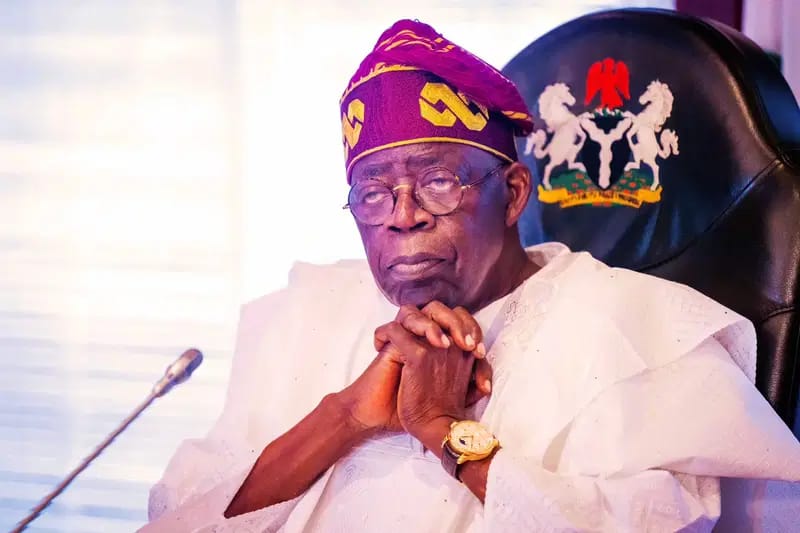
History often reveals itself not in moments of noise, but in moments of alignment-when power, timing and leadership converge. Nigeria is living through such a moment and at its centre stands President Bola Ahmed Tinubu. The expanding national political consensus coalescing around the APC is not an accident of electoral arithmetic; it is the culmination of decades of political engineering, negotiations and strategic bridge-building in which Asiwaju has been the principal architect.
Nigeria’s recurring challenge has never been the absence of reform ideas. What has been missing is a leader capable of commanding sufficient national consensus to implement them.
Constitutional conferences have come and gone. Committees have produced volumes of recommendations. Yet reform repeatedly stalled at the altar of political fragmentation and mutual suspicion. Tinubu’s ascendancy marks a departure from that cycle.
Unlike many leaders who inherit power without reach, Tinubu arrived at the presidency with a deep, cross-regional political network patiently built over time. His politics has always been coalition politics-pragmatic, inclusive and unsentimental.
From his days as a pro-democracy activist, to his tenure as Governor of Lagos State and through his role in forging the APC itself, Tinubu demonstrated a rare understanding of Nigeria’s power map and how to align its diverse interests without collapsing into sectionalism.
The current national convergence around the APC reflects this strategic depth. It is not merely that the party governs across much of the federation; it is that this spread cuts across traditional fault lines-North and South, Muslim and Christian, majority and minority regions. Only a leader with Tinubu’s political credibility and negotiating instinct could have held together such a broad coalition in Nigeria’s notoriously volatile political terrain.
This convergence creates something Nigeria has seldom enjoyed; the political space for courage. Restructuring- long caricatured as a sectional agenda- can now be approached as a national project.
Under Tinubu, the argument for reform no longer sounds like a threat to unity but like a strategy to save it. When a president commands trust and influence across regions, fears give way to dialogue and suspicion yields to pragmatism.
Nigeria’s problems are structural and well known. Over-centralisation has weakened security, stifled economic initiative and eroded accountability. States remain fiscally dependent and administratively constrained, while the federal centre is overburdened and inefficient. These dysfunctions persist not because they are unsolvable, but because previous leaders lacked the political alignment to confront them decisively.
Tinubu’s leadership changes that equation. His presidency coincides with a rare political consensus strong enough to sustain difficult conversations about devolution, fiscal federalism, state policing and a more balanced federation. Crucially, this is not consensus born of coercion, but of political inclusion. It is the product of alliances negotiated, interests balanced and egos managed – hallmarks of Tinubu’s political style.
With the groundwork of national consensus already laid, Kano’s decision to plug into the centre reflects a clear reading of history, power and opportunity. Given its demographic strength, economic reach and symbolic standing in the North, Kano’s cooperation significantly deepens the legitimacy and reach of ongoing reforms. More than a political gesture, the alignment positions the state as an active stakeholder in shaping outcomes rather than reacting to them.
At a time when reform demands coordination and shared purpose, Kano’s alignment enhances its influence at the centre while reinforcing national stability and policy coherence.
Yet history is unforgiving of missed opportunities.
Consensus can be a tool for reform or a trap of complacency. The measure of Tinubu’s place in Nigeria’s political history will not be the scale of his political dominance, but the depth of the reforms he dares to pursue. Power that merely consolidates itself is soon forgotten; power that restructures a nation endures.
Restructuring under Tinubu need not be radical rupture. It can be deliberate, negotiated and stabilizing – strengthening the federation by empowering its parts while preserving national cohesion. That balance between firmness and flexibility is precisely where Tinubu’s political genius has always resided.
This moment calls for statesmanship over partisanship, legacy over longevity. If Tinubu deploys this unprecedented national consensus to reset Nigeria’s federal architecture, history will remember him not merely as a master strategist, but as the leader who finally aligned Nigeria’s power structure with its realities. Moments like this define nations and leaders. For Bola Ahmed Tinubu, this is more than a presidency. It is an appointment with history!
Barrister Aminu Hussaini is the Special Adviser to the Governor of Kano State – AKY on Justice/Constitutional Matters: +234 8033742424 – aminuhussaini173@gmail.com

 Dan Zaki Media