Renewed Hope Agenda: Dr Mustapha Abdullahi Walking The Talk.

President Bola Ahmed Tinubu’s Renewed Hope Agenda is the overarching philosophy guiding his administration’s policies, which focus on restoring confidence, attracting investments, and empowering citizens through various initiatives.

Renewed hope” means a revived or re-established sense of optimism and belief in a positive future, often after a period of difficulty or disappointment.

It signifies regaining hope and confidence, whether through personal effort, external programs, or spiritual means, to overcome challenges and strive for a better life.

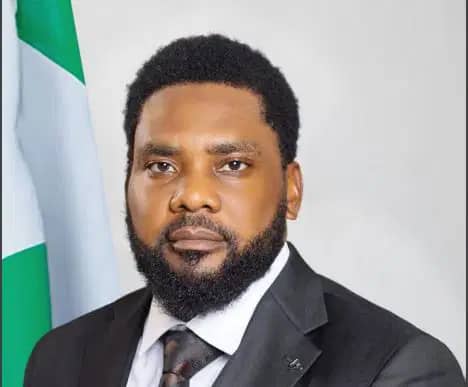
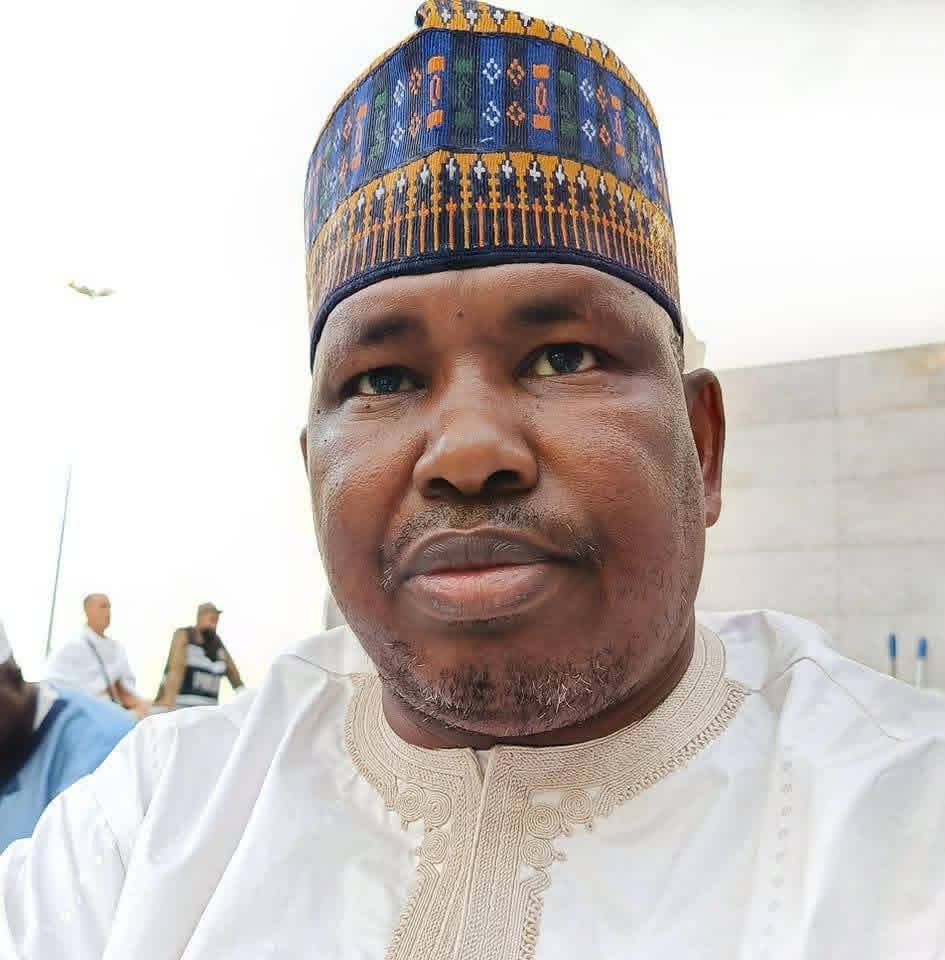
For Dr Mustapha Abdullahi, Director General of Energy Commission of Nigeria, (ECN) his devotion and dedication to attracting investments in the energy sector and striving to put the sector in the global map is highly commendable.

As a dedicated believer in the Renewed Hope Agenda and it’s benefits to Nigerians, he has made exploits in repositioning the energy sector.

Recently, Dr Mustapha Abdullahi recorded a great feat and landmark achievement as he finalized partnership between Nigeria and the World’s Largest Solar Panel Production Company LONGi, At its Headquarters In China.

Nigeria concluded a strategic partnership through the Energy Commission of Nigeria (ECN), with the World’s Largest Solar Panel Production Company, LONGi, in Xi’an, Shaanxi China.

The Nigerian delegation, the Energy Commission of Nigeria ECN led by its Director-General, Dr. Mustapha Abdullahi was received by President Boshen Zhong and Vice President Li Wenxue of LONGi, were taken on a tour of one of the world’s largest solar cell production facilities.

The visit follows the Memorandum of Understanding (MoU) signed between ECN and LONGi in London earlier this year.

While on the visit, Dr Mustapha Abdullahi advanced discussions on the establishment of a 500–1000 MW solar panel production factory in Nigeria; a move set to significantly boost the nation’s renewable energy sector.

ECN’s presentation highlighted Africa’s growing market and the demand potential for solar mini-grids and also, emphasized President Bola Ahmed Tinubu’s Renewed Hope Solarisation Policy, which seeks to accelerate access to clean energy across Nigeria.

This is as LONGi expressed strong interest in investing in Nigeria and demonstrated readiness to advance concrete plans for the construction of the factory.

This partnership marks a historic milestone for the Nigerian renewable energy landscape and aligns with national efforts to expand local solar manufacturing capacity.

The ECN which is working assiduously to ensure that Nigerians enjoy improved electricity, a vision of the Dr. Abdullahi Mustapha led management to deliver on the Renewed Hope Initiative of President Bola Ahmed Tinubu administration’s policy on solarization, looks forward to working closely with LONGi and the Federal Government to realize this transformative initiative, which will create jobs, enhance energy security, and drive sustainable development across the country.

In another positive development and constant pursuit of delivering the benefits of Renewed Hope Agenda to the people, the Energy Commission Of Nigeria through its DG, Dr Mustapha Abdullahi signed a Memorandum of Understanding with UNIDACO Limited, London, for an initial €100 million investment in Nigeria’s energy sector.

The DG of ECN who disclosed this said, “The signing, held at the House of Lords, London, during the Renewed Hope Global Dialogue (UK Edition), marks a major milestone in advancing Nigeria’s clean energy transition.”

According to him, “This partnership underscores our commitment to expanding renewable energy access, driving innovation, and strengthening Nigeria’s capacity to harness clean technologies.

“Moreover, it aligns with President Bola Ahmed Tinubu’s Renewed Hope Agenda, particularly on sustainable energy solutions as a catalyst for economic growth and development.

“This distinctive MoU was signed in the presence of dignitaries and investors of repute from Nigeria and across the world.

“Overall, this milestone reaffirms our resolve to deepen global partnerships that will accelerate Nigeria’s energy transformation. Together, we are charting a new course toward an inclusive, energy-secure, and prosperous nation built on innovation and collaboration. The DG, Energy Commission revealed.

With ardent adherents of Renewed Hope Agenda like Dr Mustapha Abdullahi, DG of ECN, the government of President Bola Ahmed Tinubu is sure walking the talk of Renewed Hope Agenda.

KANO’S GEOSTRATEGIC RELEVANCE IN NIGERIA’S CONFLICT LANDSCAPE: BEYOND POLITICS – WHY KANO DESERVES A SPECIAL FEDERAL STATUS

By Aminu Hussaini

Kano State is crucial to Nigeria’s security and economic future, serving as a shield and gateway. The state’s strategic location and economic significance is important to national stability. Barrister Aminu Hussaini Sagagi in this write up examines why Kano’s strategic security and a major economic driver, deserves a dedicated federal funding, with infrastructure investment, and institutionalization as a special Federal Security and Economic Status.


In the unfolding dynamics of Nigeria’s national security and economic future, Kano State stands as both a shield and a gateway — a critical axis whose stability is indispensable to the peace and prosperity of the nation. The strategic need for the Federal Government to accord Kano a special Federal Security and Economic Status has become not just desirable but urgent, given the State’s centrality as a security buffer zone and a commercial hub vital to Nigeria’s regional and continental aspirations.

This urgency has been underscored by recent reports of bandit incursions in Shanono Local Government Area, signaling the growing fragility of the northern security belt. These attacks are a stark reminder that even relatively stable states like Kano are not immune to the spillover of violence from surrounding regions. The time to act is now — before the ripple of insecurity breaches Kano’s long-standing resilience.

A Strategic Security Buffer in Northern Nigeria

Kano occupies a rare and irreplaceable position in Nigeria’s security architecture. It sits at the crossroads of the North-West, North-East, and North-Central regions, all corridors of complex conflicts involving insurgency, banditry and communal tension.

For over a decade, Kano has served as a stabilizing buffer, preventing the contagion of insecurity from neighbouring states such as Kaduna, Zamfara, Katsina, Bauchi and Yobe. This function has not happened by accident; it is the product of community vigilance, responsible governance and proactive local collaboration with federal security agencies.

But with the recent rise in cross-border bandit activity, especially the attacks in Shanono, the State’s strategic insulation faces serious strain. If Kano’s stability falters, the humanitarian and economic consequences could be national in scale. This is why the Federal Government must act swiftly to institutionalize Kano’s protection through a clearly defined federal security framework.

A Federal Security and Economic Designation

Kano’s significance transcends local or regional boundaries. Its stability underpins national cohesion, northern economic productivity, and inter-state commerce.

What the moment demands is an official Federal Security and Economic Designation — a framework that integrates military, intelligence and economic interventions under a unified federal structure, akin to the model used for the Niger Delta and the Federal Capital Territory. Such a designation would ensure dedicated federal funding, enhanced security coordination and infrastructural investment aligned with Kano’s role as Nigeria’s northern economic hub.

Economic Gateway to the African Continental Free Trade Area (AfCFTA)

Kano is more than a domestic stronghold; it is Nigeria’s gateway to continental trade. With the operationalization of the African Continental Free Trade Area (AfCFTA), Kano’s position as a commercial and logistics hub becomes a matter of national strategy.

The State connects Nigeria directly to the Sahel and North Africa through well-established trade routes and emerging infrastructure like the Kano–Maradi railway, Aminu Kano International Airport and the Dala Inland Dry Port. To ignore Kano’s economic potential is to undermine Nigeria’s leverage in the AfCFTA framework.

A Federal Economic Zone status would strengthen these corridors, attract investment and institutionalize Kano as a major driver of Nigeria’s regional export economy.

A Moment of Opportunity under a Progressive State Administration

This is also a moment of historic alignment between opportunity and leadership. Kano today is governed by an aggressively progressive administration, under His Excellency, Alhaji Abba Kabir Yusuf — one that has demonstrated readiness to reform, innovate and partner constructively with the Federal Government.

Seizing this window of cooperation is crucial. A federal intervention now will not only reinforce Kano’s stability but also amplify the developmental momentum already being driven by the State Government in areas such as education, urban renewal, industrial revitalization and youth empowerment.

Waiting for instability to escalate before responding would be a costly mistake. The Shanono incident should be treated as a warning shot — not an isolated occurrence. The Federal Government must act with dispatch, leveraging the synergy with Kano’s reform-minded administration to secure and strengthen the State’s strategic role in Nigeria’s future.

Why Federal Designation is Essential

Granting Kano this dual status — as a Federal Security and Economic Zone — will institutionalize federal security coordination in the State; protect national industrial and commercial assets; enhance cross-border trade and anti-smuggling frameworks; strengthen Nigeria’s northern logistics corridor for the AfCFTA; and reinforce national unity through shared economic prosperity.

Such a designation could be achieved via Presidential Executive Order or Legislative Action, providing a durable legal basis for sustained federal engagement and investment.

Conclusion

Kano’s stability is not just a regional issue, it is a national imperative. With rising insecurity in the northern corridors and new economic frontiers opening under the AfCFTA, Kano’s role as both a fortress and a frontier must be preserved and enhanced.

The Federal Government has before it a rare convergence of opportunity and necessity: a progressive State leadership willing to collaborate and a moment demanding swift, strategic action.

To delay is to invite crisis. To act now is to safeguard the nation’s future. Because when Kano stands, Nigeria stands. Kano must never be allowed to fall.


This piece is contributed by Barrister Aminu Hussaini, the Special Adviser on Justice/Constitutional Matters to His Excellency, Alhaji Abba Kabir Yusuf, Executive Governor of Kano State.

Nigeria, UK Firm Seal €100 Million Deal to Boost Clean Energy Development

The Energy Commission of Nigeria (ECN) has signed a landmark Memorandum of Understanding (MoU) with UNIDACO Limited, a London-based energy investment company, for an initial €100 million investment aimed at advancing Nigeria’s clean energy transition.

The agreement was formalized at the House of Lords, London, during the Renewed Hope Global Dialogue (UK Edition) — a high-profile event bringing together international investors, policymakers, and energy experts to discuss sustainable development partnerships.

Speaking at the ceremony, the Director General of the Energy Commission of Nigeria, Dr. Mustapha Abdullahi, described the deal as a strategic step toward unlocking Nigeria’s renewable energy potential.

“This partnership underscores our commitment to expanding renewable energy access, driving innovation, and strengthening Nigeria’s capacity to harness clean technologies,” Dr. Abdullahi stated.

He emphasized that the MoU aligns with President Bola Ahmed Tinubu’s Renewed Hope Agenda, which identifies sustainable energy as a key driver of industrialization, economic growth, and social development.

Dr. Abdullahi also highlighted that the signing ceremony was witnessed by prominent dignitaries and investors from Nigeria, the United Kingdom, and other countries, reflecting global confidence in Nigeria’s energy sector reforms.

“This milestone reaffirms our resolve to deepen international cooperation and attract responsible investments that will accelerate Nigeria’s energy transformation. Together, we are charting a new course toward an inclusive, energy-secure, and prosperous nation built on innovation and collaboration,” he added.

The €100 million investment will focus on expanding renewable energy infrastructure, promoting off-grid power solutions, and strengthening local capacity for clean technology manufacturing and deployment.

UNIDACO Limited’s Managing Director, who represented the company at the event, expressed optimism about the collaboration, noting that Nigeria’s vast energy potential presents a promising environment for sustainable investment.

With this agreement, Nigeria moves a step closer to achieving its energy transition goals and reducing dependence on fossil fuels, while positioning itself as a regional hub for renewable energy innovation and green industrialization.

ADC Kaduna Rejects Alleged Expulsion of Acting Chairman, Officials

The Kaduna State chapter of the African Democratic Congress (ADC) has dismissed as null and void the purported expulsion of its Acting Chairman, Hon. Ahmed Tijjani Mustapha, and several other key party officials in the state.

In a statement issued on Monday, October 27, 2025, and signed by the State Publicity Secretary, Engr. Idris Musa, the party described the alleged expulsion as a desperate move by individuals who, according to the ADC, are not bona fide members of the party.

Engr. Musa stated that the individuals behind the purported expulsion are members of the Social Democratic Party (SDP) in Kaduna State but have been parading themselves as ADC members with the aim of hijacking the party’s structure in the state and across the North-West zone.

“We wish to inform all well-meaning and duly registered members of the ADC in Kaduna State to disregard the said expulsion, as it is considered null and void,” the statement said.

“The action appears to be a desperate attempt by individuals who are not members of the ADC but are struggling to take over the party under the guise of coalition partners. It’s either you are in the ADC or you are out,” the party added.

The statement further linked the alleged expulsion to a pending legal case — Suit No. FCT/HC/GAR/CV/383/2025 — filed at the FCT High Court in Abuja. The case reportedly challenges the dual membership status of former Kaduna State Governor Malam Nasir El-Rufai and others.

Engr. Musa noted that the move against the state leadership, including Hon. Ahmed Tijjani Mustapha, Engr. Idris Musa, Alhaji Suleiman Abdulkadir, and Barr. Danlami Dabai, was a “fight-back” by those affected by the legal action.

The statement urged ADC members across Kaduna State to remain calm and law-abiding while the matter is before the court.

“We will not join issues with these individuals, especially in view of the pending case at the FCT High Court in Abuja. Our party will continue to operate in accordance with its Constitution and principles, and we will not be swayed by the antics of desperate politicians,” it stated.

The ADC reaffirmed its commitment to internal democracy, rule of law, and the unity of its members in Kaduna State and beyond.

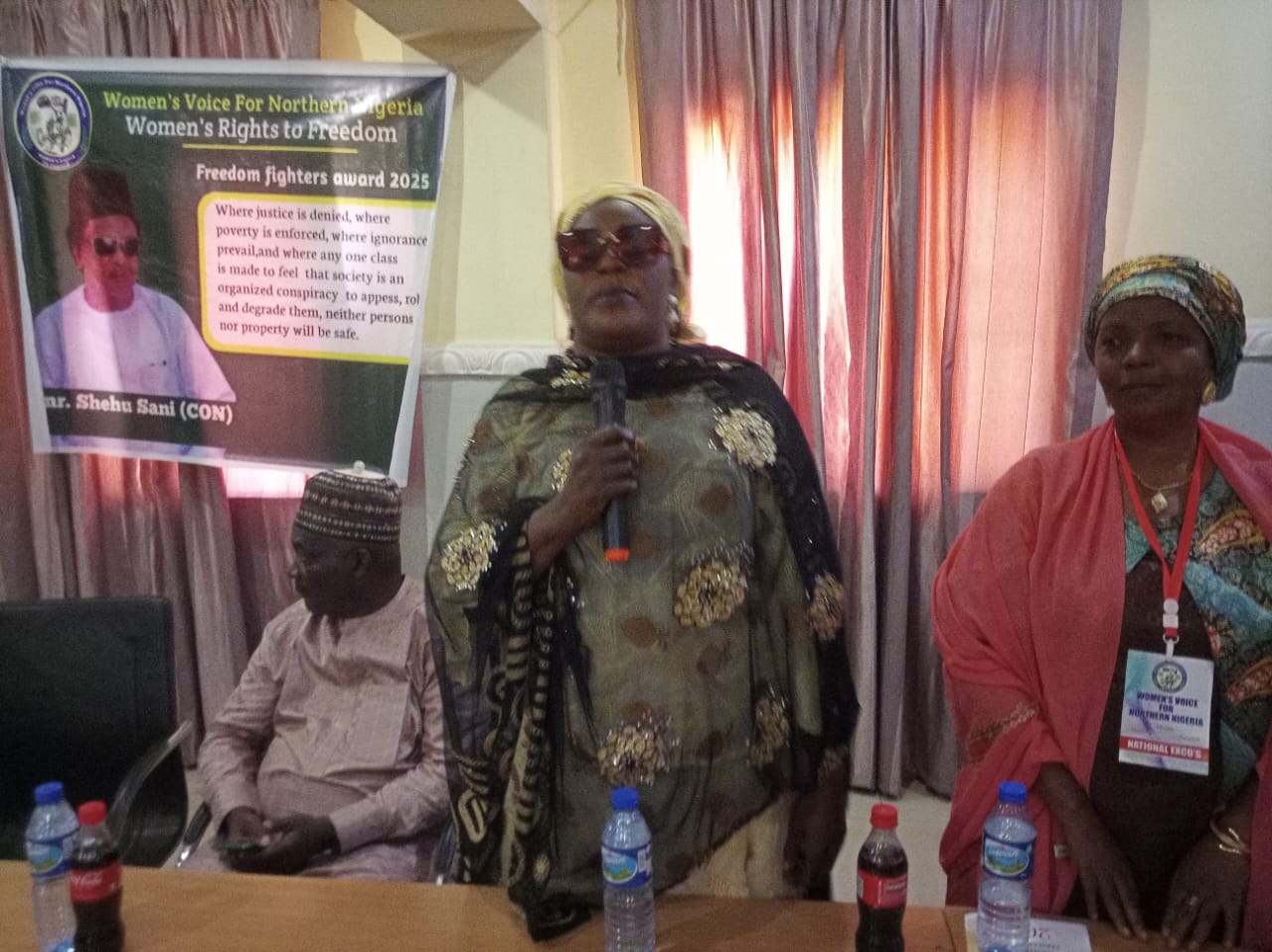
Senator Shehu Sani Tasks Islamic Clerics To Shun Political Deceit, Endorses Governor Uba Sani’s Re-election

Former Kaduna Central lawmaker, Senator Shehu Sani, has cautioned Islamic clerics to be vigilant and wary of the vain promises and deceitful tactics often employed by politicians during election periods.

Speaking during an interactive session with Islamic scholars across the 23 local government areas of Kaduna, Senator Sani urged clerics to resist inducements and political manipulation aimed at winning their support for selfish political interests.

He, however, called on Islamic clerics across Kaduna State to support the re-election bid of Governor Uba Sani, whom he described as a leader committed to good governance and responsive to the needs of the people.

According to the former senator, Governor Uba Sani has demonstrated a high sense of responsibility and dedication to addressing the yearnings of citizens since assuming office nearly two years ago.

Senator Sani further encouraged the clerics to unite in identifying and presenting the major needs of the Muslim community—such as the renovation of mosques, establishment of Islamic schools, and support for orphanages—to the government in a structured and coordinated manner.

He warned religious leaders to beware of political figures who only seek their support during elections and neglect them thereafter.

“The era of deceit and the use-and-dump approach to Islamic clerics is over,” Senator Sani declared.

He appealed to the religious leaders to continue praying for Governor Uba Sani and to support his administration, describing the governor as a listening and visionary leader committed to the development of Kaduna State.

In their brief remarks, several Islamic clerics commended Senator Sani for taking the bold step to convene such a meeting, which they said exposed the deceitful tendencies of some politicians.

They also pledged to use their influence as mobilisers to support credible leaders with proven records of capacity and performance in future elections.

Dr. Mustapha Abdullahi: Transforming Nigeria’s Energy Landscape Through Visionary Leadership

In the appointment of Dr. Mustapha Abdullahi as the Director-General and Chief Executive Officer of the Energy Commission of Nigeria (ECN), stakeholders roundly commended President Bola Ahmed Tinubu on the choice of this astute and result-oriented energy expert and policy strategist—a visionary administrator.

The saying that a golden fish has no hiding place aptly qualifies Dr. Mustapha Abdullahi’s appointment by His Excellency Bola Ahmed Tinubu, GCFR, who was able to spot the energy poster boy and place him strategically where competence meets passion.

Indeed, the appointment of Dr. Abdullahi as the Director-General of the Energy Commission qualifies the saying of putting a round peg in a round hole.

Dr. Mustapha Abdullahi, who combines academic distinction with hands-on experience in energy systems, regulation, and innovation, has variously been described by stakeholders as a key figure in shaping Nigeria’s energy future—scoring a vital point in the Renewed Hope Initiative of President Bola Ahmed Tinubu’s administration, which clearly aims to resuscitate and reinvigorate the country’s energy sector.

As an avid scholar who holds a master’s and a doctorate in Engineering from the prestigious University of Manchester, and who has also served as a Research Associate and Teaching Assistant in the School of Mechanical, Aerospace, and Civil Engineering in the same institution, Dr. Abdullahi’s penchant for excellence is distinctive and highly commendable.

As a Chartered Engineer (CEng) and a member of the Institution of Mechanical Engineers (MIMechE), Dr. Abdullahi has distinguished himself in ways so uncommon and achievements quite alluring. His commitment to professional excellence and technical innovation underscores his capacity and capabilities in delivering on the mandate of the Energy Sector and the Commission generally.

As a Postdoctoral Fellow at the University of Manchester, United Kingdom, from 2021 to 2023, Dr. Abdullahi conducted an impactful research entitled “Assessment of the Structural Integrity,” contributing valuable insights to the field. His work was recognized and supported by the Industry Collaboration Fund, United Kingdom, highlighting his commitment to advancing knowledge through industry-academia collaboration.

Dr. Abdullahi has over 14 years of experience in Nigeria’s energy sector, particularly within the oil and gas industry, and is known to have spent a significant part of his career at the Department of Petroleum Resources (now the Nigerian Upstream Petroleum Regulatory Commission—NUPRC), contributing to regulatory policy, energy systems management, and sustainability initiatives.

His technical competence is further complemented by his role at the National Space Research and Development Agency (NASRDA), where he engaged in research and development at the intersection of space and energy technology.

Before being appointed as Director-General of ECN, Dr. Abdullahi served as the Senior Technical Adviser to the former Minister of Innovation, Science, and Technology, Chief Uche Geoffrey Nnaji. In that capacity, he was instrumental in shaping national policies that promoted innovation, renewable energy adoption, and scientific advancement.

His advisory role provided strategic direction for programmes aimed at building Nigeria’s technological capacity in line with global sustainability trends.

He is widely reputed to be a multi-disciplinary leader, with a systems-thinking approach to Nigeria’s energy challenges, integrating insights from engineering, space research, and policy.

Since assuming office as

Turmoil Hits ADC as Kaduna Chairman, Secretary Suspended Over Scandalous Misconduct

The African Democratic Congress (ADC) in Kaduna State has suspended its State Chairman, Elder Patrick Ambut, and State Secretary, Mr. Victor Oluwatuyi, over allegations of anti-party activities, gross misconduct, and violation of the party’s constitution.

In a statement issued on Monday by the State Publicity Secretary, Engr. Idris Musa, the party said the suspension followed a meeting of the State Working Committee (SWC) convened after receiving petitions from the Igabi and Sabon Gari Local Government Chairmen, as well as complaints from other local chapters.

According to the statement, the suspended officials were accused of engaging in acts capable of causing disaffection among members, creating parallel party organs, and breaching several provisions of the ADC Constitution (2022 as amended).

The ADC also disclosed that it received a letter from the Kaduna State Police Command confirming an ongoing investigation into the alleged illegal removal of the Igabi Local Government Chairman, involving both suspended officials.

“The Chairman’s undemocratic disposition and selective relationship with State Working Committee members, coupled with his poor leadership style, contravene Articles 7(8 & 11) and 20(1b) of the ADC Constitution,” the statement said.

The party further accused Ambut and Oluwatuyi of running the Kaduna ADC like a “secret cult,” making unilateral decisions without due consultation or reference to the State Working Committee, and undermining the principles of transparency, accountability, and rule of law for personal gain.

To restore order and preserve the integrity of the party, the State Working Committee resolved to: suspend Elder Patrick Ambut and Mr. Victor Oluwatuyi pending the conclusion of investigations, and constitute a five-man Disciplinary Committee to probe the allegations and make recommendations.

The SWC, however, appointed Hon. Ahmed Tijjani Mustapha, the Deputy State Chairman, as Acting State Chairman, and Mrs. Rachael Didams as Acting State Secretary.

The statement added that the decision was necessary to uphold the ADC’s values and allow the disciplinary process to proceed without interference.

“The suspension is aimed at protecting the integrity of the party and ensuring due process in line with our constitution,” the statement concluded.

FACTS, NOT NOISE, DEFINE KANO’S TRUE PROGRESS

By Aminu Hussaini Sagagi

In Kano today, we are witnessing a familiar political drama. Whenever real progress is being made—whenever leaders roll up their sleeves to serve the people—there are always those who cannot stand to see it happen.

They resort to propaganda—loud, misleading, and divisive. Sadly, this has become the favoured tool of the opposition against the administration of Governor Abba Kabir Yusuf (AKY).

Instead of offering constructive criticism, they prefer to manufacture noise. They twist facts, amplify half-truths, and spread stories designed to inflame emotions.

Their aim is simple: to turn public attention away from the positive transformation taking place in Kano under AKY’s leadership. They want citizens distracted, confused, and doubtful—because that is the only way they can remain relevant.

But let us be honest: who truly benefits from propaganda? Certainly not the ordinary Kano indigenes trying to put food on the table, send children to school, or get medical care when sick.

Propaganda benefits only a small circle of political actors desperate to capture power, even if it costs tearing down the State’s image in the process.

Look around Kano, despite the noise, unprecedented number of projects are being executed. Take Rahma, a final-year student in one of our public secondary schools; she used to sit in overcrowded classrooms with leaking roofs, but today, after rehabilitation works by AKY’s government her school has standard furniture, a safer learning environment, and well-motivated teachers. For Rahma, progress is not a rumor—it is a reality.

Or consider Musa and Emmanuel, traders in Sabon Gari market who remember how bad roads used to make transporting their merchandise a nightmare. Now, with new roads and drainages projects opening up their areas, their businesses are thriving. That is the kind of development propaganda cannot hide.

And what about Khadija, a mother of three who once feared going to public hospitals because they lacked basic facilities? Today, she walks into a revitalized healthcare center where she can get treatment without begging for help. For her, the difference is life-saving.

Yet, the opposition would rather distract you to forget these stories. They push you into seeing shadows instead of substance, hearing noise instead of development. But the truth cannot be hidden; a rehabilitated school speaks louder than a false headline; a functioning hospital is weightier than a fabricated rumor.

Kano people must not allow themselves to be used as pawns in a propaganda war.

No matter how loud the opposition shouts, the good people of Kano must stand firm and say loudly and unanimously – nay to distractions!

We must rise above the distractions and judge by results, not by rhetoric.

Leadership is about service, and service is exactly what AKY is delivering in Kano.

History will not remember the propaganda; it will remember the projects, the reforms, and the opportunities created under this administration.

That is why, no matter how loud the opposition shouts, the good people of Kano must stand firm and say loudly and unanimously – nay to distractions!

Kano’s future is too important to be toyed with. The focus should remain on progress, and progress is exactly what Governor Abba Kabir Yusuf is bringing to the State.

This opinion piece is contributed by Barr. Aminu Hussaini Sagagi, the Special Adviser to the Governor of Kano State on Justice/Constitutional Matters

Shehu Sani Hails Mbah’s Switch to APC as South East’s Ticket to Political Relevance

Former lawmaker, Senator Shehu Sani, has described Governor Peter Mbah’s recent defection to the All Progressives Congress (APC) as a strategic and welcome development for the South East region, saying the move would strengthen the zone’s position in Nigeria’s mainstream political structure.

Reacting to public criticisms that trailed the Enugu State governor’s decision, Sani said Mbah’s defection should not be seen as an act of betrayal but rather as a bold step to rescue the South East from political isolation and irrelevance at the federal level.

Speaking with journalists shortly after attending the United Africa Development Initiative Summit held at Merit House, Abuja, Senator Sani stated:“Governor Mbah’s defection to the APC is a blessing to the South Eastern part of the country. It is a strategic decision that will factor the region into the mainstream political equation in Nigeria.”

The former senator argued that those accusing the governor of betrayal were being unfair, noting that members of the Labour Party (LP) and African Democratic Congress (ADC) had also defected from the Peoples Democratic Party (PDP) in the past.

“Why should LP and ADC members be angry with a PDP member who joined the APC when many of them also left the PDP earlier? Politics is about alignment and strategy, not sentiment,” he stated.

Sani further maintained that Mbah’s defection would open new political opportunities for the South East, saying it had “raised the chances of the region rather than diminished them.”

Describing the move metaphorically, he added:“Mbah’s defection is like taking the goods of the South East to a bigger market where the action is.”

He, therefore, urged political leaders and stakeholders in the region to rally around the governor and use his new platform to push for greater inclusion, development, and representation at the national level.

World Ports Endorse Nigeria’s Dantsoho as IAPH Vice-President

At the ongoing World Ports Conference in Kobe, Japan, port professionals drawn from 64 countries have endorsed the election of the Managing Director of the Nigerian Ports Authority (NPA), Dr. Abubakar Dantsoho, as Vice-President of the International Association for Ports and Harbours (IAPH).

Coming on the heels of President Bola Ahmed Tinubu’s approval of the National Policy on Marine and Blue Economy, Dantsoho’s election as Vice-President of the IAPH is a testament to Nigeria’s growing influence in the comity of maritime nations.

The International Association for Ports and Harbours (IAPH) is a non-governmental organization headquartered in Tokyo, Japan. In November 1955, about 100 world port leaders gathered in Los Angeles to announce the creation of IAPH.

Over the past six decades, IAPH has developed into a global alliance of ports, representing about 190 ports and 167 port-related businesses in 89 countries as of December 6, 2024. Member ports collectively handle well over 60% of the world’s seaborne trade and over 60% of global container traffic.

IAPH aims to be the global trade association of choice for port authorities and operators, representing their interests at regulatory levels such as the International Maritime Organization (IMO), the World Customs Organization (WCO), the International Standards Organization (ISO), and other global alliances like the Global Maritime Forum and the World Economic Forum (WEF).

IAPH also enjoys consultative status and works on behalf of ports with various United Nations bodies, including the United Nations Conference on Trade and Development (UNCTAD), the United Nations Environment Program (UNEP), and the UN Global Compact.