By: Dr. Lawal Umar Maradun, FNIPR, ARPA
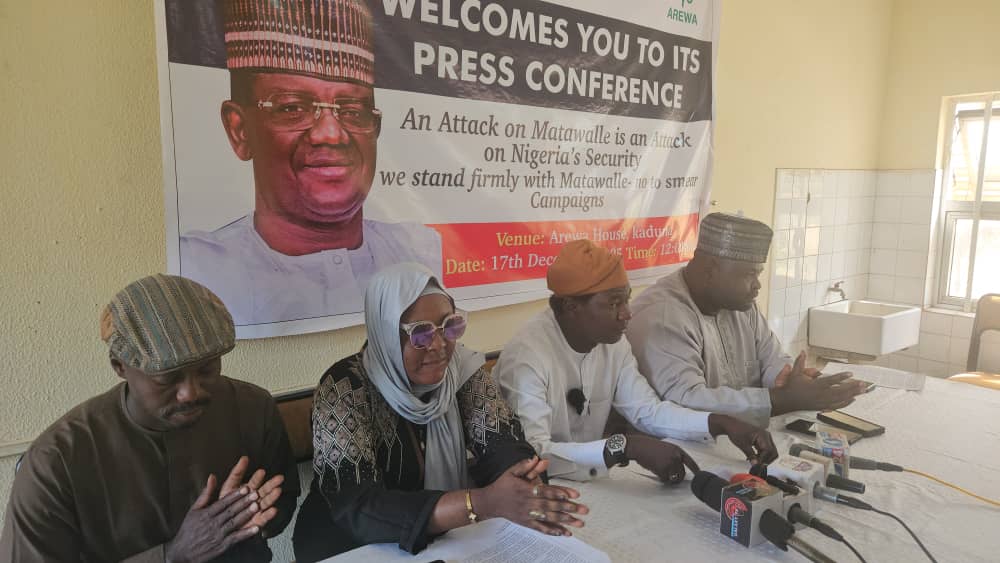
In recent weeks, a surge of allegations and commentary concerning the former Governor of Zamfara State and current Honourable Minister of State for Defence, Dr. Bello Mohammed Matawalle, has dominated sections of the media and social platforms. While public scrutiny of office holders is both legitimate and essential in a democracy, such scrutiny must be anchored in facts, due process, and contextual accuracy—not conjecture, selective narratives, or partisan interpretation.
This intervention is neither an attempt to litigate public opinion nor a call for universal agreement. Rather, it seeks to clarify the record for stakeholders whose judgments are guided by evidence, institutional processes, and long-term national interest.
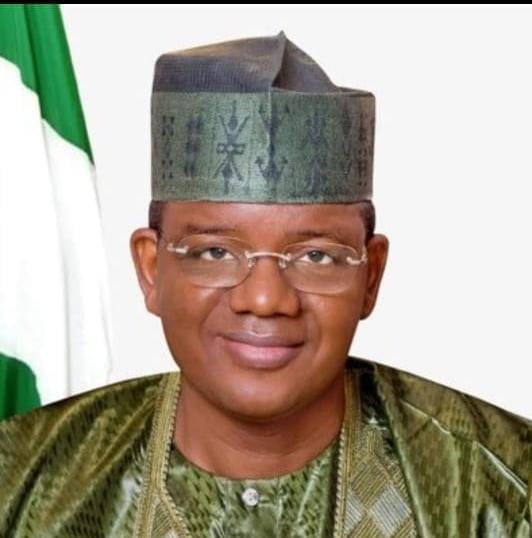
UNDERSTANDING BELLO MOHAMMED MATAWALLE
Born on February 12, 1969, in Maradun, Zamfara State, Dr. Bello Mohammed Matawalle is a trained educator, administrator, and political technocrat with over three decades of public service experience. He served as the Executive Governor of Zamfara State from 2019 to 2023, a period marked by some of the most complex security challenges in Nigeria’s recent history.
For over a decade prior to his tenure, Zamfara State had been at the epicentre of banditry, mass displacement, and kidnapping for ransom. Upon assuming office, Matawalle adopted a multi-layered strategy that combined security operations with dialogue, community engagement, and intelligence-led interventions. Within his first year, the state recorded a notable reduction in violent incidents—an outcome widely acknowledged at the time as a departure from previous inertia.
POST-TENURE SCRUTINY AND POLITICAL CONTEXT
Following the conclusion of his tenure in 2023, Matawalle became the subject of sustained criticism, much of which relies on retrospective reinterpretations of his policies and actions. During the 2023 general elections, he also served as the North-West Zonal Coordinator for the Tinubu/Shettima presidential campaign, a role widely credited by party stakeholders as instrumental in consolidating electoral support across the region.
His brief absence from public view after the elections was interpreted by some commentators as evasion, particularly amid publicised allegations involving the Economic and Financial Crimes Commission (EFCC). However, Matawalle re-emerged publicly in Abuja ahead of the May 29, 2023 presidential inauguration, attending official state functions without hesitation—conduct inconsistent with claims of a public official “in hiding.”
UNDERSTANDING THE ALLEGATIONS IN PROPER CONTEXT
The allegations currently circulating broadly fall into three categories:
- Claims of financial impropriety during his tenure as governor, largely driven by political successors and commentators.
- Mischaracterisation of security dialogue initiatives, portrayed by some as complicity rather than conflict-resolution strategies.
- Opinion-based conclusions that presume guilt in the absence of judicial determination.
It is critical to distinguish between allegations under review, administrative or investigative processes, and established facts. Much of the prevailing discourse collapses these distinctions, resulting in misleading conclusions and reputational damage unsupported by legal findings.
CLARIFYING THE FACTS
Several facts deserve emphasis:
No court of competent jurisdiction has found Dr. Bello Matawalle guilty of any wrongdoing. Engagements with anti-corruption or oversight institutions where they exist are procedural mechanisms, not verdicts. Financial governance during Matawalle’s administration followed approved budgetary frameworks and was subject to statutory audits and legislative oversight, consistent with constitutional requirements for state governments.
Conflating investigative processes with criminal conviction not only misrepresents reality but also undermines the credibility of accountability institutions themselves.
MEDIA AMPLIFICATION AND POLITICAL INCENTIVES
An examination of how these allegations are amplified reveals a familiar pattern: partisan actors, politically motivated platforms, and commentators who often substitute outrage for verification. In such environments, “media trialism” thrives—where individuals are tried and sentenced in the court of public opinion long before due process is allowed to run its course.
Several respected journalists and policy analysts have warned that this trend erodes public trust, weakens institutions, and distorts democratic accountability.
DUE PROCESS IS A DEMOCRATIC STRENGTH
Dr. Matawalle has consistently affirmed his respect for lawful institutions and due process. In a functioning democracy, the presumption of innocence is not a favour it is a right. Investigations must be allowed to conclude independently, and outcomes must rest on evidence, not volume or virality.
History repeatedly shows that many high-profile allegations lose credibility once subjected to forensic scrutiny. This reality underscores why restraint—not a rush to judgment—defines responsible citizenship and ethical journalism.
A CALL FOR BALANCE, NOT SILENCE
This moment does not call for blind loyalty or uncritical defence. It calls for balance.
Public officials must remain accountable. Institutions must be allowed to work. Citizens must demand accuracy over amplification. Dr. Matawalle’s record, like that of any public servant, should be evaluated holistically—through verified facts and lawful outcomes, not fragmented narratives designed to inflame rather than inform.
CONCLUSION: TRUTH HAS A TIMELINE
Reputations are often tested during moments of political uncertainty. But truth is rarely rushed and never replaced by rumour. Where institutional processes are ongoing, the responsible position is to allow due process to speak, facts to lead, and time to separate allegation from reality.
In the end, credibility is not built by shouting the loudest, but by standing firmly on verifiable truth.
Dr. Lawal Umar Maradun is a journalist and Corporate Affairs Manager, Nigerian Agricultural Insurance Corporation, Abuja.


 Dan Zaki Media