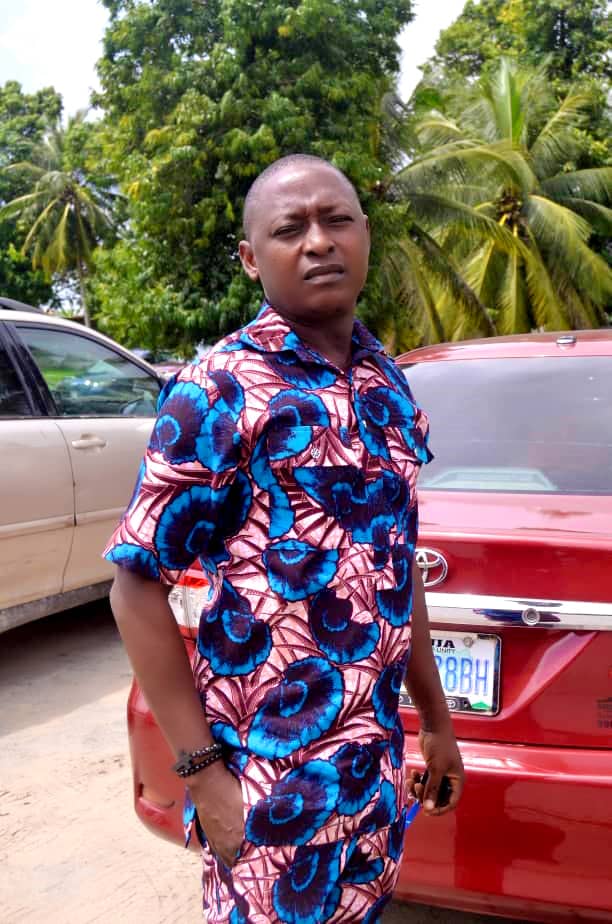
The much-anticipated prosecution of Mr. Sylvanus Enonche Okoh, accused of identity theft, fraud, and criminal conspiracy, suffered another setback yesterday as the second defendant in the case failed to appear in court, leading to yet another postponement of proceedings.
Mr. Okoh, who also goes by the alias Kenneth Ogbogu, is currently being held by the Economic and Financial Crimes Commission (EFCC) on related financial crime charges. However, the Federal Capital Territory (FCT) Command of the Nigeria Police Force, which is spearheading the prosecution, was unable to present him in court due to custody complications.
Sources close to the investigation revealed that the Police now require formal cooperation with the EFCC to secure the temporary release of Okoh for arraignment in the identity theft case. In addition to the EFCC’s probe, the suspect is under a parallel investigation by the State Intelligence Department (SID) of the FCT Police Command for alleged offenses including forgery, impersonation, and criminal conspiracy.
A senior police official, who spoke to TruthNigeria on condition of anonymity, confirmed that the current delay is rooted in inter-agency administrative hurdles. “This is not a matter of unwillingness to prosecute,” he said. “But we need the EFCC’s formal cooperation to have Mr. Okoh appear in court, as he is involved in overlapping investigations.”
The absence of Mr. Okoh—seen as central to the case—has left the complainants and their legal team increasingly frustrated. The victim’s family has raised concerns over the repeated adjournments, fearing they may embolden the accused and weaken the impact of the legal process.
“This kind of delay sends the wrong signal to other potential offenders,” said Luka Soto, co-author of this report and a legal correspondent. “When agencies fail to coordinate, justice is not only delayed but potentially denied.”
Legal analysts warn that high-profile fraud and identity theft cases such as this could lose public confidence if law enforcement bodies fail to align their efforts in a timely and transparent manner.
Court officials have not issued a new trial date, pending confirmation of the defendant’s availability. Meanwhile, pressure is mounting from civil society and legal advocacy groups urging the EFCC and the Police to streamline their collaboration to ensure that Okoh is produced in court without further delays.
The matter is expected to return to court as soon as inter-agency arrangements are finalized.
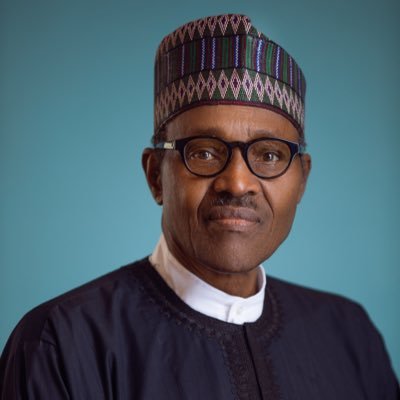
The Southern and Middle Belt Leaders Forum (SMBLF) has reacted to the passing of former Nigerian President and military ruler, General Muhammadu Buhari (GCFR), describing his death as an opportunity for deep national introspection rather than mere ceremonial mourning.
In a statement issued on Sunday and signed by prominent regional leaders, the Forum said that while the death of a former head of state naturally invites grief, Nigerians must use the moment to assess the country’s leadership trajectory and the long-standing consequences of Buhari’s years in power—both as a military dictator (1983–1985) and later as a two-term elected president (2015–2023).
“His passing was received with sadness but also with sober reflection,” the statement noted. “General Buhari’s leadership—before, during, and after his presidency—has had a lasting impact on Nigeria’s history, one that must be critically evaluated.”
The Forum acknowledged Buhari’s perseverance in returning to power through democratic means, describing his eventual election in 2015—after three failed attempts—as “historic” and a show of “unyielding belief in the democratic process.”
However, the SMBLF was candid about the controversial legacy of his civilian presidency. “His eight-year administration was marred by serious national challenges,” the statement said. “From widespread insecurity to economic instability and worsening ethnic divisions, Buhari’s leadership remains one of the most debated in modern Nigerian history.”
Despite the criticism, the group affirmed that Buhari’s name “will forever occupy a space in Nigeria’s democratic journey,” though the full measure of his legacy is still being written.
SMBLF extended condolences to the late president’s family and to the nation. “We pray that his soul finds eternal peace with his Maker,” it said.
The statement was endorsed by the key figures of Nigeria’s Southern and Middle Belt regional organizations:
HRM Oba Oladipo Olaitan, for Afenifere
Dr. Bitrus Pogu, for the Middle Belt Forum
Senator John Azuta-Mbata, for Ohanaeze Ndigbo Worldwide
Ambassador Godknows Igali, for PANDEF
General Muhammadu Buhari died on June 14, 2025, at the age of 82. He leaves behind a complex legacy—one that will continue to shape Nigeria’s political discourse for years to come.
In a country where telling the truth often comes with a price, few have paid it as dearly as Luka Binniyat.
The fearless conflict reporter and former Kaduna Bureau Chief for Vanguard Newspapers, who once languished in prison for daring to report on the massacres in Southern Kaduna, has just reached a monumental milestone in his journey of advocacy and resistance. Binniyat has been appointed the National Spokesperson of the Southern and Middle Belt Leadership Forum (SMBLF)—a powerful coalition representing over 140 million Nigerians across Nigeria’s Middle Belt and Southern regions.
It’s a seismic moment not just for Binniyat, but for the communities he has consistently risked his life to defend.
The Price of Truth
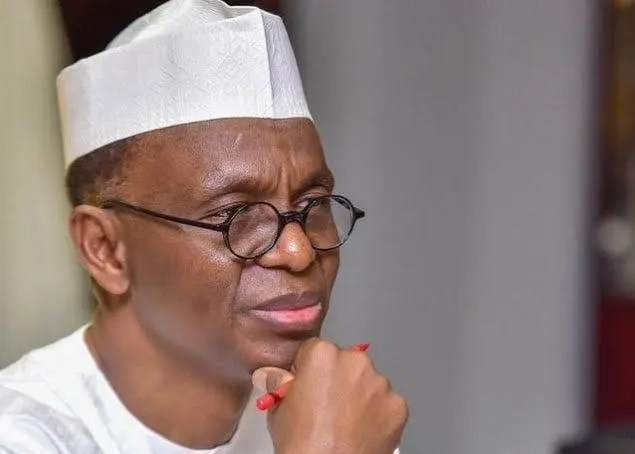
Luka’s rise to national prominence was not paved with privilege or comfort, but rather with persecution, prison bars, and the haunting silence of solitary confinement. In 2017, under the repressive administration of then-Kaduna State Governor Nasir El-Rufai, Binniyat was arrested for his relentless coverage of ethnically motivated killings in Southern Kaduna. His crime? Telling the truth.
Despite court orders demanding his release, the state—emboldened by impunity and intolerance—kept Luka in and out of prison and courtrooms for over seven years. His jailer-in-chief, El-Rufai, backed by his commissioner for Internal Security, Samuel Aruwan, treated Luka as a dissident rather than a journalist.
“I was once thrown into a dinghy Police cell with no ventilation, no toilet, no water,” Luka recalled. “Inmates were fainting, and some never woke up. The plan was simple: I was meant to die in that dungeon. But God had other plans. “I have appeared before six Judges and detained in Kaduna prisons 3 times,” Luka recalled.
A Voice Amplified by TruthNigeria
Those plans took a transformative turn when Luka joined TruthNigeria, a fearless investigative media platform founded by Judd Saul, a renowned American filmmaker, journalist, and human rights advocate. TruthNigeria did not just give Luka a desk—it gave him a megaphone. Under the platform’s editorial vision, Luka’s voice grew louder, his reach extended, and the truth he carried could no longer be silenced by the corridors of power.
TruthNigeria, known for its unrelenting commitment to factual, faith-based, and humanitarian reporting, became the perfect ally for a journalist molded in fire.
Behind the newsroom was Douglas Burton, fondly known as “Uncle Doug” by colleagues—a master craftsman of storytelling and an editor with an uncanny ability to draw the best from his reporters. Burton nurtured Luka’s raw courage and refined his reporting into impactful journalism that caught global attention.
Together, with the support of Judd Saul and Douglas Burton, Luka revealed to the world stories that Nigerian mainstream outlets often buried under fear or compromise. From the ethnic cleansing of indigenous communities in the Middle Belt to the harrowing aftermath of the Chibok schoolgirl kidnappings, Luka remained on the frontlines—undaunted, unwavering.
In 2023, Luka returned to Chibok—this time undercover—to document the unspoken trauma of parents whose daughters had vanished into the hands of terrorists. It was one of many assignments that proved Luka wasn’t just a journalist. He was a voice for the voiceless.
When asked what drives him, Luka gave a chilling yet resolute answer—one that has become his rallying creed: “I will not stop writing until the blood spilled in Southern Kaduna, across the Middle Belt, and throughout Southern Nigeria is stopped.”
From Journalist to Advocate
Recognizing his unflinching courage, the Middle Belt Forum (MBF) appointed him Chair of its Kaduna Chapter. Within six months, his impact was unmistakable. Soon after, he rose to become MBF’s National Spokesperson.
Now, with his latest elevation to National Spokesperson of the Southern and Middle Belt Leadership Forum (SMBLF), Luka Binniyat carries the torch for over 140 million citizens across Nigeria’s geopolitical south and central heartlands. More specifically, he will be speaking for the over 40 million indigenous people of the Middle Belt—communities long trapped in the political and cultural contraption called Northern Nigeria, and for more than 100 million Southerners from the South East, South West, and South South, whose voices have too often been sidelined in national conversations.
This appointment places Luka not just at the podiums of press conferences, but at the heart of Nigeria’s struggle for equity, justice, and truth. He will speak for the persecuted, for communities still reeling from state-enabled terrorism, and for millions who refuse to be silent in the face of corruption and marginalization.
A Mandate Forged in Fire
Luka’s journey is more than a personal triumph. It is a testament to what happens when integrity meets opportunity—when a man refuses to compromise, even when the cost is his freedom.
He is no longer just a reporter. He is a national conscience, a moral compass in a land where truth is often the first casualty. With the power of TruthNigeria behind him, the mentorship of Douglas Burton beside him, and the spiritual covering of Judd Saul over him, Luka is poised to take the voice of the marginalized to national and global platforms.
This is not the end of Luka Binniyat’s story. It is the beginning of a larger assignment.
Abuja, Nigeria — The Federal Government has formally charged one Mr. Sylvanus Enonche Okoh, also known as “General Kenneth Ogbogu,” before the High Court of the Federal Capital Territory Apo in Abuja over allegations of a brazen scheme to impersonate a deceased businessman and fraudulently obtain valuable property documents.
The case, filed in the Abuja Judicial Division of the FCT High Court Apo lists multiple counts of criminal conduct including making false statements to the Economic and Financial Crimes Commission (EFCC) and cheating by personation.
According to the charges, the defendant in 2022 falsely claimed to be the late Mr. Kenneth Ogbogu—a man widely known to have died and been buried—by assuming his identity and using it in official dealings.
COUNT ONE of the charge sheet alleges that Sylvanus Enonche Okoh, in an attempt to mislead anti-graft investigators, knowingly made false statements to an EFCC officer in the course of the officer’s official duties. Prosecutors claim the defendant did so with full knowledge that the statements were untrue, in a bid to obstruct or derail the investigation into his activities.
This alleged offence is said to contravene Section 39(2)(a) of the Economic and Financial Crimes Commission (Establishment) Act, 2004, and is punishable under Section 39(2)(b) of the same law.
COUNT TWO accuses Okoh of cheating by personation—specifically, of misrepresenting himself as “General Kenneth Ogbogu” in order to fraudulently obtain title documents for a parcel of land described as Plot No. 1, Cadastral Zone 7, Sabo Gida District, Abuja.
According to the prosecution, the defendant presented himself as the deceased businessman and used the name and style of K.E. Keneco Nigeria Limited—a company formerly owned by the late Kenneth Ogbogu—in a deliberate attempt to seize control of the property.
The charges highlight the seriousness of the alleged fraud, suggesting a calculated effort to exploit the identity of a dead man to steal valuable assets, including real estate in Abuja’s lucrative property market.
The Federal Government argues that such schemes do not only victimize grieving families but also undermine public trust in legal, financial, and land registration systems.
The case has generated public interest after civil society groups last week issued a strongly worded statement accusing Okoh of “desecrating the memory of the dead” by forging corporate records, colluding with corrupt insiders, and plunging the late Ogbogu’s elderly parents into “protracted emotional trauma.”
In their statement, the coalition described the alleged impersonation as “a grave assault on the integrity of Nigeria’s legal and corporate governance systems,” and demanded swift and transparent prosecution of all those involved.
Meanwhile, EFCC investigators are said to have been building their case for months, examining records from the Corporate Affairs Commission (CAC) and the Abuja Geographic Information Systems (AGIS) where the defendant allegedly attempted to alter corporate and land ownership records.
Legal analysts say the case may set an important precedent about identity theft and fraud in Nigeria’s real estate and corporate sectors, where corrupt insiders have been repeatedly accused of enabling scams by forging documents and subverting due process.
However, the court granted him bail but still in the EFCC custody till bail is perfected. Nonetheless, our correspondent gathered that Mr Sylvanus Okoh is not yet set for any break soon as other victims are said to be pursuing Justice on separate matter involving him.The matter which is already scheduled to proceed before the FCT High Court in Abuja, with prosecutors pledging to present detailed evidence of how the alleged impersonation was carried out.
If convicted, Mr. Okoh faces significant prison terms under existing Nigerian anti-fraud laws.
Authorities say they hope the case will send a strong message that crimes exploiting the dead will not go unpunished.
Asaba, Delta State — In a resounding appeal for proactive governance, the Unemployed Youths Association of Nigeria (UYAN) has urged the Delta State Government, Stakeholders and well meaning organisations, to partner with youth-focused organizations to combat rising unemployment, drug abuse, and insecurity.
Speaking in Asaba during a youth-focused dialogue session, UYAN National Officer and Spokesperson for The Actual Voice of Truth and Advocacy Foundation” Comrade Chuba Okpuzor and The Delta State Chairman Comrade Gbenga Fajoye emphasized that empowering the youth through employment and skill development is the surest way to prevent the spread of drug trafficking, cultism, vandalism, and armed robbery.
“We are at a point where youth empowerment must become a top priority, not an afterthought,” said Comrade Gbenga Fajoye. “The longer we leave millions of young Nigerians idle and untrained, the more we fertilize the ground for crime, drug addiction, and restiveness.”
Commendation and Constructive Critique
While acknowledging strides made by Governor Sheriff Oborevwori’s administration, alongside other organisations domiciled within the state, in job creation and infrastructural development, UYAN leaders insisted that a deeper collaboration is needed between the government and grassroots organizations to ensure equitable access to opportunities.
“We commend Governor Sheriff Oborevwori for the ongoing infrastructural projects and his visible commitment to development, as well as The MD Tantita Security Services Ltd High Chief Keston Pondi, ” said Comrade Chuba Okpuzor. “However, youth empowerment is a grassroots issue that requires a decentralized approach. The state must partner with credible organizations like UYAN to reach distant but deserving communities.”
Comrade Okpuzor further explained that while government/public private led initiatives have created jobs in some sectors, many young people, especially in rural and semi-urban areas, remain excluded due to limited access to information, poor connectivity, or political isolation.
“Though the governor and other stakeholders have done a great job in reducing unemployment in the state,” he said, “there is still a need to spread these efforts across all senatorial zones by leveraging credible youth-based associations.”
The Drug Abuse Epidemic: A Social Time Bomb
UYAN emphasized the link between unemployment and drug abuse, describing it as a vicious cycle that continues to claim the mental and physical health of Nigerian youth.
“When youths are jobless, they lose hope. When they lose hope, they turn to hard substances, and from there, many fall into criminal networks,” said Fajoye. “This is not just a health issue — it’s a national security threat.”
The association also expressed concern over the surge in drug trafficking activities in parts of Delta State, noting that many youths involved in these illegal trades are driven by economic desperation.
“We must understand that the poor are not the architects of drug trade — they are victims,” Okpuzor said. “Without intervention, our youths will continue to be exploited by criminal syndicates.”
UYAN’s Proposed Solutions: Skills, Not Slogans
The officials outlined practical, community-based solutions, urging the Delta State Government, stakeholders and well meaning Nigerians, to support vocational training programs and invest in agricultural-based entrepreneurship for youth.
“We are willing and ready to collaborate with state and federal lawmakers — senators and members of the House of Representatives and credible organisations— to roll out skill acquisition programs in fisheries, poultry, snail farming, carpentry, welding, and more,” Okpuzor said.
He explained that skill-based development programs, if well funded and supervised, could offer a sustainable path out of poverty for thousands of unemployed youths across the state.
“We don’t need handouts. What we need is a platform to train, produce, and contribute to the economy,” Fajoye added. “With the right tools, our youth can become employers of labor, not liabilities.”
Call for Unified Action Across Institutions
UYAN called on religious leaders, traditional rulers, and educational institutions to support the government’s efforts by creating safe, moral, and developmental spaces for youth.
“The fight against insecurity, drug abuse, and unemployment cannot be left to the government and a few organisations alone,” said Okpuzor. “Civil society, schools, and families must all work in synergy.”
They also urged the Delta State Ministry of Youth Development to create a robust directory of credible youth-based organizations in the state, as a way of formalizing partnerships and ensuring accountability.
UYAN’s message is clear: empowering the youth is not merely an economic policy — it is a security strategy and a moral obligation. In a state blessed with resources and human capital, the cost of inaction is far too high.
“This is the time to act,” Fajoye concluded. “If we empower the youth today, we will not have to battle the criminals of tomorrow.”
The ball, they say, is now in the court of Governor Oborevwori, stakeholders, multi-nationals and the Delta State leadership to rise to the occasion, bridge the gap, and make youth development a central pillar of peace and progress.
A new Brand Ambassador, Anteyi Grace Ene popularly known as AGEless, was at the weekend unveiled just as erudite sports administrator and Chairman of the Benue State Football Association (BSFA), Chief Dr. Paul Edeh Esq, launched a real estate company named Signature Edge.
The high-octane event, which held inside the prestigious Transcorp Hilton Hotel in Abuja, was well-attended by a teeming class of societal men and women including captains of industry, business executives, politicians, among others.
The real estate company’s founder and Chairman, Chief Edeh, at the unveiling, gave an overview as well as unique descriptive highlights of Signature Edge with its trademark Living The Future.
While describing the making of the real estate firm as historic and symbolic, Chief Edeh said the choice of Ageless is because her personality attributes resonate with the characteristics Signature Edge stands for.
The football club owner cum real estate doyen emphatically stated that Signature Edge is anchored on integrity and affordable opportunities, offering a wide range of building options to suit every individual’s taste amidst a variety of choices.
He said, “Signature Edge was born out of a conviction that every home, every space, and every investment should carry a mark of lasting value. We see real estate not merely as structures of brick and mortar but as living statements of who we are and what we believe the future must hold.
“We are here to set a new pace guided by integrity, inspired by culture, enabled by technology, and driven by a commitment to make decent shelter accessible for all. Whether you are seeking a sanctuary for your family, a fertile ground for enterprise, or a strategic portfolio for generational wealth, Signature Edge stands ready to bring that vision to life.
“Our approach is simple yet profound. We do not just sell property; we deliver the dignity of belonging, the security of ownership, and the promise of tomorrow. That is the Edge in Signature Edge the extra mile, the thoughtful detail, the unwavering standard that will become a reference point in Africa’s real estate landscape.
“With every project, we will bring the home to you rather than have you chase after it. In five years and beyond, Signature Edge will be the mark that elevates lives, communities, and the continent at large.”
He said the vision of establishing Signature Edge is one that will stay ahead and remain relevant for subscribers or those who seek to acquire property through it, adding, “We are a visionary real estate company building Africa’s future through culturally inspired, tech-enabled, and community-centred property development, sales, investment, and management.”
On what inspired Signature Edge with its logo featuring a thumbprint, Chief Edeh, with years of experience in real estate development, said, “The newly formed company seeks to supply what is culturally unique to everyone, and our vision is to ensure that every Nigerian, whether you have or not, should have a decent home over time.
“We believe that we are bringing to the fore a real estate company that in the next five years will be a pillar upon which every other real estate firm identifies. We seek to achieve this by bringing the home to you, rather than you looking for it.”
The company’s number one man then announced that already, Signature Edge has struck mouth-watering deals in about 24 hours after it was launched.
He said the company now has available property in Abuja, Lagos, Namibia, and parts of Africa.
The Brand Ambassador, after committing to pacts with Signature Edge, assured of her readiness to use her wealth of experience and reach to elevate the fortunes of the firm.
She said, “I am sincerely committed to justifying that trust which the Board and Management of Signature Edge have placed on me. Building on previous experience, I believe that my skills will bring tremendous success for the company. We will certainly achieve great things together.”
Some of those who spoke at the event, including a governorship candidate for the Anambra 2025 election and a former Speaker, hailed the concept and ideology behind Signature Edge and predicted that the company will soon make an incredible impact that will surpass ages.
Highpoint of the event was the symbolic signing of a long-term agreement between Signature Edge and Brand Ambassador AGEless.
In a stirring call to action, Comrade Chuba Okpuzor has raised the alarm over the alarming surge of drug-related mental health cases among Nigerian youths, describing the situation as a national emergency that demands immediate attention from policymakers and youth leaders alike.
Speaking on Monday, Comrade Chuba Okpuzor, a prominent youth advocate and national officer of the Unemployed Youths Association of Nigeria (UYAN), warned that the country’s already overstretched psychiatric facilities are being overwhelmed by young Nigerians suffering from drug-induced mental health crises — many of them unemployed and vulnerable.
“We are forced to respond in this manner because some gullible and supposedly educated youths are still blind to the severity of this issue,” Okpuzor said. “Despite overwhelming evidence, some still treat this as trivial, while every day our poorly funded psychiatric centres admit more mentally disturbed young Nigerians.”
According to Comrade Chuba the issue is beyond isolated incidents or street-level peddlers. He stressed that drug abuse is the consequence of a deeply entrenched syndicate, which targets the most vulnerable members of society — the poor, the unemployed, and the disillusioned.
“Drug trafficking isn’t driven by the poor, the middle class, or the downtrodden — but tragically, they are its victims,” he said. “These substances reach the streets through powerful channels, and are consumed by youths in a confused, battered state of mind. That makes them dangerously susceptible.”
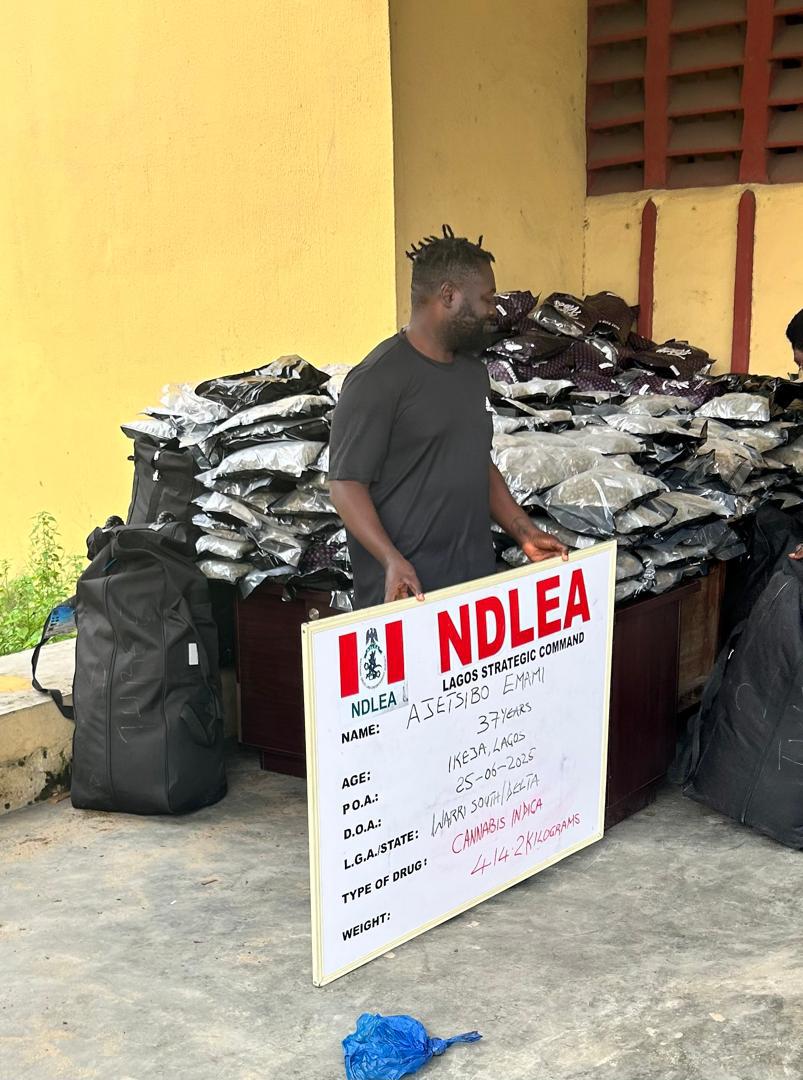
He further commended the efforts of the National Drug Law Enforcement Agency (NDLEA) in its recent busts and crackdowns, but appealed for intensified efforts and deeper investigations.
“We appreciate the resilience of the NDLEA. However, we urge them to dig deeper. As drug trafficking is a well-organized business involving highly placed individuals. The poor are the users, not the masterminds. The investigation must go beyond the foot soldiers.”
Comrade Chuba Okpuzor also called on youth organizations, religious institutions, and the media to treat the issue with the seriousness it deserves. He warned that playing politics or trivializing the mental health impact of drugs is a betrayal of national conscience.
“Any attempt to make light of this issue is a disservice to our collective sensibility and national conscience,” he emphasized. “This is not the time to be passive. It is time to lead, advocate, and demand protection for our generation.”
As drug abuse continues to claim young lives and erode the mental fabric of the nation’s future, voices like Comrade Chuba’s highlight the urgency to move beyond denial and take decisive action.
Comrade Gbenga Fajoye, the Chairman of the Unemployed Youths Association of Nigeria (UYAN), Delta State Chapter, alongside Comr Chuba Okpuzor has congratulated the Nigerian team — comprised entirely of Delta State students — for emerging champions at the World Schools Debate Championship held recently in Doha, Qatar.
The youth leaders, in a press statement issued in Asaba, hailed the victory as not only a triumph for Delta State but also a bold testament to the intellectual potential of Nigerian youths when given the right platform.
“These students have done what even our most celebrated politicians and athletes sometimes struggle to do — they have put Nigeria on the global map for the right reasons,” said Fajoye. “Their discipline, intellect, and courage speak volumes about the greatness within the Nigerian youth.”
The team, made up of Wisdom Chukwuma (Government College, Ughelli), Otorvo Uyoyou (Alegbo Secondary School, Effurun), Abraham Honour (Okpaka Secondary School), Ikhamateh Splendour (Government Model Secondary School, Asaba), and Alika Daniel (Utagba-Ogbe Grammar School, Kwale), secured a commanding 5–1 aggregate win against top global teams including those from the State of Chicago, USA, and Qatar.
Comrade Fajoye reserved special praise for Miss Ikhamateh Splendour, who was named Overall Best Debater at the championship. “Her recognition as the best in the world proves that with commitment and mentorship, the Nigerian girl-child can rise to heights once thought impossible.” while Comrade Chuba took time to elogise Alika Daniel, who represented Utagba-Ogbe grammar school in kwale, which happens to be his home town, where he hails from, taking the opportunity to encourage all the youths and students of Utagba-Ogbe community and Delta State by extension, to remain focused and resilient, stressing that education still remains a vital route to greatness.
Governor Sheriff Oborevwori had earlier congratulated the team through his Chief Press Secretary, Sir Festus Ahon, describing their feat as “a shining testament to the Delta Can-Do Spirit” and a validation of the state’s investment in education under the MORE Agenda.
The youth leaders emphasized that this achievement must serve as a rallying point for both government and private stakeholders to invest more in youth development. “It is not enough to clap for these students — we must create thousands more like them through deliberate policy, funding, and mentorship.”
The leaders also issued a passionate appeal to the youths of Dekra community, a region grappling with rising unemployment and social instability, urging them to emulate the victorious students from Delta. “Let this achievement inspire you — not to pick up arms or fall into despair — but to pick up books, seek knowledge, and prove that Dekra too can produce world-class champions.”
He encouraged local leaders in Dekra and other underserved areas to support youth education initiatives, offer mentorship programs, and collaborate with NGOs to create opportunities. “If given the right environment, the youths of Dekra can not only lift their community but also become symbols of hope for the entire nation,” they both declared.
The Northern Awareness Network (NAN) has faulted recent comments made by former Governor of Rivers State, Rotimi Amaechi, and former Governor of Kaduna State, Nasir El-Rufai, over the alleged role of the Independent National Electoral Commission (INEC) in frustrating the registration of the All Democratic Alliance (ADA).
In a strongly worded statement released by its Chairman, Salihu Suleiman, the group described the comments from the two political figures as “misguided, misleading, and a thinly veiled attempt to blame a credible institution for their political failures.”
Suleiman said, “The remarks made by Amaechi and El-Rufai reflect a gross misunderstanding of the responsibilities of INEC and an irresponsible attempt to discredit a body that has consistently demonstrated its commitment to free and fair electoral processes.”
According to NAN, the assertion by Amaechi that INEC is deliberately obstructing the registration of new political parties is not only baseless but smacks of desperation by politicians who have lost touch with the grassroots and are struggling to maintain relevance in the country’s evolving political landscape.
The group emphasized that INEC’s role is governed by clear legal and administrative frameworks, noting that all political associations seeking registration must meet constitutional and regulatory requirements — including providing a verifiable party address and details of its national officers.
“These requirements,” Suleiman explained, “are not designed to frustrate political groups but to ensure that parties are genuinely grounded in democratic principles and not just paper coalitions created to serve personal ambitions.”
NAN added that rather than accusing INEC of bias, political leaders should focus on fulfilling these basic criteria and mobilizing grassroots support if they hope to be taken seriously.
The organization also expressed concern over a recent remark by El-Rufai, who cast doubt on INEC’s impartiality, claiming the commission was unlikely to register ADA. NAN described such statements as “reckless and damaging to the credibility of democratic institutions.”
“It is particularly worrisome that a former governor who once championed the independence of INEC would now turn around to undermine it with careless allegations,” Suleiman said.
NAN urged political stakeholders to engage INEC with decorum and maturity, stressing that public trust in electoral institutions is crucial for the sustainability of Nigeria’s democracy.
The statement continued: “Casting aspersions on INEC’s integrity without evidence erodes public confidence and promotes a narrative of political victimhood that is neither accurate nor helpful. Opposition groups must realize that their problems lie not with INEC, but with their inability to connect meaningfully with the electorate.”
The NAN concluded by calling on El-Rufai, Amaechi, and others in the ADA coalition to “engage in genuine political organizing, develop people-focused manifestos, and desist from scapegoating national institutions for their internal weaknesses.”
According to NAN, true political relevance is earned by engaging citizens, not by forming elite alliances or launching unfounded attacks on regulatory bodies.
“INEC is not the problem,” the group said. “If anything, the political class must rise to the challenge of building credible alternatives that resonate with the aspirations of ordinary Nigerians.”
The Arewa Youth Consultative Forum (AYCF) has dismissed allegations by former governors Nasir El-Rufai of Kaduna State and Rotimi Amaechi of Rivers State accusing the Independent National Electoral Commission (INEC) of frustrating the registration of the All Democratic Alliance (ADA).
In a statement issued by its President General, Yerima Shettima, the AYCF described the comments from the two political heavyweights as misleading and unhelpful in the build-up to the 2027 general elections.
“Firstly, it is essential to recognize that the electoral process in Nigeria is governed by established procedures designed to ensure transparency, fairness, and accountability,” Shettima said. “The assertion made by Amaechi that INEC is intentionally obstructing the efforts of opposition parties is not only unfounded but also reflects a misunderstanding of the electoral framework that governs party registration.”
Shettima emphasized that INEC’s requirements, such as submission of valid office addresses and identification of key party officials, are standard for all political organizations. According to him, ADA’s difficulties in fulfilling these conditions should not be construed as institutional bias.
“It is disheartening that, in their frustration, Amaechi and El-Rufai have resorted to making sensational claims rather than addressing the substantive issues at hand,” Shettima stated. “INEC cannot and should not be expected to lower its standards for any group, including the ADA.”
The AYCF further noted that the urgency behind ADA’s formation appears more politically motivated than grounded in procedural diligence, adding that such haste often leads to avoidable lapses.
“We acknowledge the right of any group to seek political representation,” Shettima said, “but that right must be exercised within the bounds of legality and responsibility. The legitimacy of ADA or any other political entity hinges on its ability to meet INEC’s stipulated requirements.”
On El-Rufai’s skepticism about INEC’s impartiality, Shettima said such rhetoric undermines the credibility of Nigeria’s democratic institutions and risks creating an atmosphere of public distrust.
“Rather than casting aspersions on INEC, political leaders should engage constructively with the system and foster trust. Undermining the electoral process through unfounded accusations does more harm than good,” the AYCF said.
The forum concluded by reiterating its support for INEC and calling on all political stakeholders to avoid inflammatory statements that could destabilize the electoral landscape ahead of 2027.
“We urge the ADA and other emerging parties to approach their registration processes with seriousness and in accordance with INEC’s guidelines. The future of our democracy depends on it,” Shettima said.