PRP Leadership Crisis Deepens as Faction Petitions INEC, Threatens Court Action

The leadership crisis within the People’s Redemption Party (PRP) has taken a fresh dimension as a faction of the party has petitioned the Independent National Electoral Commission (INEC), challenging the emergence of Hakeem Baba-Ahmed as National Chairman and seeking recognition as the authentic leadership of the party.

The faction, which traces its lineage to the leadership structure established by the late PRP founder, Balarabe Musa, also threatened legal action against INEC if the electoral body fails to recognize its claims.

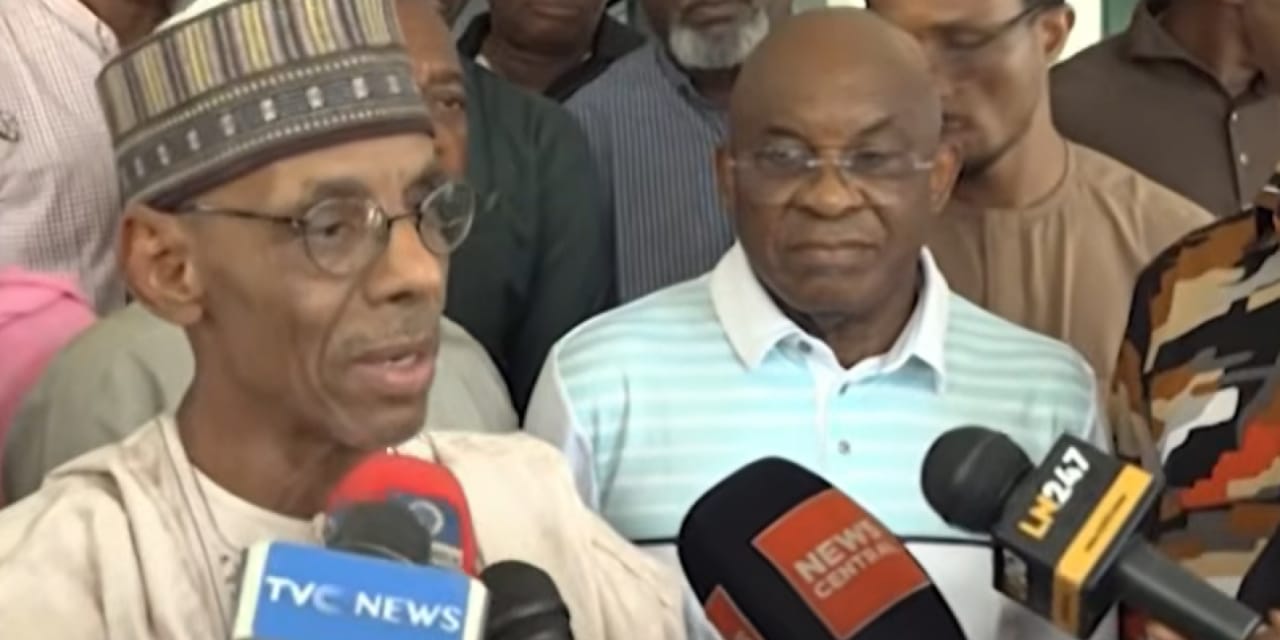
Speaking with journalists, the faction’s Publicity Secretary, Comrade Bashir Bello, alleged that the convention that produced Hakeem Baba-Ahmed as National Chairman was unconstitutional and contrary to the provisions of the party’s constitution.

According to Bello, the late Balarabe Musa had handed over the affairs of the party to former National Chairman, Malam Falalu Bello, who completed his tenure in office in accordance with the party’s constitution. He argued that Falalu Bello lacked the authority to unilaterally transfer leadership of the party to Baba-Ahmed.

“The late Balarabe Musa handed over the affairs of the party to Malam Falalu Bello, who served as National Chairman and completed his tenure. Upon the expiration of his tenure, he ceased to be the leader of the party. However, he single-handedly handed over leadership to Hakeem Baba-Ahmed, creating unnecessary crisis in the party,” Bello said.

He stated that the faction had formally petitioned INEC over the convention that produced Baba-Ahmed, insisting that the process was flawed and violated both the spirit and letter of the PRP constitution.

Bello disclosed that the group had conducted a parallel national convention, compiled its reports and submitted them to INEC, urging the commission to recognize its faction as the legitimate leadership of the party.

“We have petitioned INEC on the conduct of the convention by Falalu Bello that ushered in Hakeem Baba-Ahmed as the party’s National Chairman, which appears flawed and against the spirit and letter of our party’s constitution.
“We have also conducted our parallel convention, compiled and submitted our report to INEC, urging the commission to recognize our faction as the authentic party,” he stated.

The factional spokesman further revealed that his group had successfully conducted primary elections and submitted the names of its candidates to INEC, including its presidential candidate for the 2027 general elections, Dr. Sani Salih Mustapha.

“Likewise, we have conducted our primaries and submitted the names of our candidates, including our presidential candidate, Dr. Sani Salih Mustapha, to the commission,” Bello said.

He, however, clarified that no court case had yet been filed against INEC, explaining that the faction was awaiting the commission’s response to its petition before taking further legal steps.
“We have not yet filed a court case. We are awaiting INEC’s response to our petition, which we may use as evidence in court if the commission’s decision does not favour us.

“Failure of the commission to recognize our faction will leave us with no other option than to seek judicial redress,” he added.

The latest development marks another chapter in the protracted leadership tussle that has continued to divide the PRP, a party founded on the principles of social justice and popular democracy by the late Balarabe Musa.

Arewa Group Commends Governor Hope Uzodimma for Protecting Northerners in Imo

An Arewa socio-cultural group has praised the Governor of Imo State, Hope Uzodimma, for what it described as his commitment to the protection of Northerners residing in the state.

The group, under the aegis of the Arewa Unity and Development Forum, said Governor Uzodimma’s administration has continued to demonstrate inclusiveness and tolerance by ensuring that residents, regardless of their ethnic or religious backgrounds, enjoy equal rights and protection under the law.

In a press statement signed by Comrade Musa Bawa Mohammed, the group’s spokesperson noted that the governor had consistently promoted peaceful coexistence among the diverse ethnic groups living in Imo State, creating an atmosphere conducive for business and social interaction.

According to the group, thousands of Northerners living and conducting legitimate businesses in the state have benefited from the government’s efforts to maintain security and foster unity among residents.

“We commend Governor Hope Uzodimma for his leadership and commitment to the safety of all Nigerians living in Imo State. His administration has shown that every citizen, irrespective of tribe or religion, deserves protection and equal opportunities,” the spokesperson said.

The forum further stated that the governor’s approach to governance has helped strengthen national integration and reduce ethnic tensions, particularly at a time when the country faces various security and socio-political challenges.

The group urged other state governors across the federation to emulate Uzodimma’s example by implementing policies that promote inclusiveness, tolerance, and peaceful coexistence among different ethnic groups.

It also reaffirmed its commitment to supporting initiatives aimed at fostering national unity and encouraging harmonious relationships among Nigerians regardless of their place of origin.

The Arewa group expressed optimism that continued collaboration between government authorities and community leaders would further enhance peace, security, and economic development in Imo State and across the country.

YARI’S SUSPECTED AGENDA TO UNDERMINE APC SUCCESS IN ZAMFARA

The recent launch of the Atiku Abubakar political platform in Zamfara State by Senator Abdulaziz Yari is a brazen act of anti-party activity designed to sabotage the re-election bid of Governor Dauda Lawal and President Bola Ahmed Tinubu, GCFR.

Credible reports confirm that Yari’s inner caucus and loyalists were fully kitted in Atiku-branded materials during the symbolic unveiling, leaving no doubt about his alignment with the opposition.

This comes against a troubling backdrop:

  1. Financial Questions: It is public knowledge that Senator Yari’s bank accounts were recently frozen by relevant authorities over unresolved financial issues.This raises serious questions he is yet to answer.
  2. Disregard for Party Unity: Yari deliberately boycotted all stakeholders’ meetings of Zamfara political leaders before and after the APC primaries, showing contempt for collective decision-making.
  3. Rejection of State Leadership: By his actions, Yari has insultingly refused to recognize Governor Dauda Lawal as the political leader of Zamfara State, thereby abdicating his responsibility to the APC structure he claims to belong to.

It is therefore inconceivable that a so-called APC leader would undermine the party’s chances ahead of crucial elections. Yet, history is repeating itself this is the same pattern of betrayal that cost APC all political offices in Zamfara in the past.

Further, there are widespread rumors that Senator Yari is bankrolling elements in opposition parties to weaken both Governor Dauda Lawal and President Tinubu’s electoral prospects.

Recall that a few months ago, Yari held a private meeting with Atiku Abubakar at the latter’s residence. No details of that meeting were disclosed. With the launch of this Atiku platform in Zamfara, it is now clear: Yari is working behind the scenes to engineer APC’s failure in Zamfara State.

We call on the APC National Working Committee to investigate these anti-party activities and act decisively. Zamfara APC cannot afford another betrayal.

Mohammed Yusuf
NATIONAL COORDINATOR.

APC RESQUE AND REBUILD MOVEMENT.

Zamfara 2027: APC Must Remain Vigilant Against Internal Sabotage.

A Political Commentary By Mustapha Mohammed Gusau.

As Nigeria gradually approaches the 2027 general elections, members and supporters of the All Progressives Congress (APC) must remain focused on anti- party activities by some aggrieved party members and loyalists.

President Bola Ahmed Tinubu’s administration continues to implement policies aimed at economic reform, security enhancement, and national development. While opinions may differ on the pace and impact of these reforms, there is no doubt that the success of the APC in 2027 will depend largely on its ability to checkmate party leaders and loyalists who are planning to sabotage the success of the APC in both governorship and presidential elections.

Steps must be put in place to cross check and monitor such ambitions party leaders who are bent on ensuring that everything must be done in accordance to their interests because they have money in their hands.

Political history has repeatedly shown that opposition parties often benefit not only from their own organization but also from conflicts within ruling parties. In Zamfara State, many party loyalists still reflect on the circumstances surrounding the APC’s loss of the governorship seat in 2023.

Different stakeholders have offered varying interpretations of what went wrong, but one lesson remains clear: disunity carries a heavy political cost.

Recent political developments and speculations have generated concerns among some APC members regarding the activities of certain influential figures within the party. There are growing discussions in political circles suggesting that some individuals may be reconsidering their political alignments ahead of 2027. While such reports remain matters of public debate and should be treated with caution until verified, they have understandably attracted the attention of party faithful.

Of particular concern to many supporters is the possibility that personal grievances, political ambitions, or unresolved disputes could overshadow the collective interests of the party in Zamfara State.

The APC recent launching of Atiku Support and Solidarity Caps by Sen. Yari loyalists and political camp and his remarks that he would not speak until after the elections, has generated concerns and dabates among APC stakeholders and political groups. Investigations into the motives behind the Yari camp recent actions and activities showed that camp was not happy with the freezing of the their Boss accounts on the allegations of financial misconduct and refusal by the President to see him in Paris when he visited the President. Angered by these combined action against their leaders, the inner circle of the political camp decided to shift their allegiance to Atiku Abubakar and some other political parties as they did to the APC in the 2023 governorship election in Zamfara State, leading to the lost of the governorship seat.
An insider who pleaded anonymous said Yari Aircraft manager and handler one Mr Ema was recently invited by the Economic and Financial Crimes Commission, EFCC and was ordered to handover all documents relating to the Yari’s Aircrafts. This, according to the inside source has caused more actions that could lead to anti-party activities during the elections.
The most significant action of the Yari camp is the recent design, production and launching of the Atiku Support Caps as shown in the pictures below.
( insert the pictures)
Party Myers leaders at both state and national levels must remain alert to any actions that may undermine party success at the 2027 elections in Zamfara State or weaken support for President Tinubu’s re-election efforts.

Political loyalty is ultimately tested during challenging periods. Genuine party leaders are expected to place the interests of their party, their state, and the nation above personal considerations.

As the 2027 elections draw nearer, APC supporters across Zamfara State must prioritize unity, grassroots mobilization, and effective communication of the achievements of the Tinubu administration.

The focus should remain on presenting a compelling vision for the future rather than engaging in destructive internal rivalries.

The road to victory in 2027 will not be determined by individual political calculations but by the collective commitment of party members to a common purpose.

APC stakeholders must therefore work together to prevent divisions, discourage sabotage, and ensure that the party remains strong enough to retain the presidency and reclaim greater political strength in Zamfara State.

History has shown that united parties win elections, while divided parties create opportunities for their opponents.

The choice before APC members is therefore clear: unity, discipline, and loyalty to the party’s shared objectives must prevail over personal interests if success is to be achieved in 2027.

Igabi APC Warns Former Speaker: “Stop Attacking the Party or Face Consequences”

The All Progressives Congress (APC) in Igabi Local Government Area of Kaduna State has cautioned former Speaker of the Kaduna State House of Assembly, Rt. Hon. Yusuf Zailani, against what it described as persistent provocative remarks and attacks on the ruling party following his defeat in the recently concluded party primaries.

The party leadership expressed concern over Zailani’s recent public comments, alleging that the former lawmaker had embarked on a campaign capable of undermining the unity and image of the APC in Kaduna State.

Speaking in a chat with journalists, the Chairman of the APC in Igabi Local Government, Hon. Bashir Jibrin Jaji, said the party was disappointed by what he termed “unwarranted vituperations” from a senior party member who had benefitted immensely from the platform of the APC.

According to Jaji, Zailani’s conduct since the conclusion of the primaries has been unbecoming of a party loyalist and could create unnecessary tension within the ranks of the party if not checked.

He noted that the APC primary election was conducted in a fair, transparent and credible manner, adding that all aspirants were given equal opportunities to test their popularity before delegates.

“Politics is not a do-or-die affair. It is a game of numbers. The people have spoken through the democratic process and every aspirant is expected to respect the outcome of the primaries,” Jaji said.

The APC chairman further alleged that since losing the contest, the former Speaker had become increasingly critical of the party and its leadership, a development he said was capable of misleading party supporters and members of the public.

He stressed that party discipline remains a core principle of the APC and warned that any member found engaging in actions capable of bringing the party into disrepute could face sanctions in line with the party’s constitution.

“We are advising Rt. Hon. Yusuf Zailani to refrain from making statements that could damage the image of the APC. Constructive criticism is welcome within the party, but attacks that portray the party negatively will not be tolerated.

“As a respected elder and former Speaker, he should be helping to strengthen party cohesion rather than creating divisions. The APC remains united and focused on delivering democratic dividends to the people,” he added.

Jaji called on party members across Igabi Local Government and Kaduna State to remain calm, loyal and committed to the ideals of the APC, irrespective of the outcome of internal contests.

He maintained that the party’s leadership remains open to reconciliation and dialogue with aggrieved members but emphasized that all members must place the collective interest of the APC above personal ambitions.

The APC chairman expressed confidence that the party would emerge stronger from the post-primary period and urged members to close ranks ahead of future political engagements.

—

Public Hospital Care In Jigawa: Lessons From The 2025 Ranking

By Yunusa Hamza (Tafidan Farin Dutse)

Public healthcare remains one of the most important measures of government performance because it directly affects the wellbeing, productivity, and quality of life of citizens. Across Nigeria, healthcare delivery continues to face numerous challenges, ranging from inadequate infrastructure and manpower shortages to concerns over affordability and accessibility of services. Despite these challenges, some states are demonstrating that sustained investments and deliberate policy actions can produce measurable improvements in healthcare delivery. Jigawa State presents one such example.

The 2025 healthcare rankings and assessments across the country brought renewed attention to the state of public healthcare in Nigeria. While many states continue to grapple with deficiencies in service delivery and declining public confidence in government-owned health facilities, the rankings also highlighted positive examples where strategic interventions have yielded encouraging results.

Among the states that stood out was Jigawa, which was ranked second among Nigeria’s best-performing states in public hospital care. The ranking reflected the level of satisfaction expressed by residents who access services across the state’s network of Apex healthcare facilities and General Hospitals. It also underscored the growing confidence of citizens in the quality, effectiveness, and efficiency of services provided by public health institutions in the state.

This achievement did not occur by chance. Over the years, the Jigawa State Government has demonstrated a commitment to strengthening healthcare delivery through increased budgetary allocations, infrastructure development, and targeted reforms aimed at improving access to quality medical services.
The state’s 2025 budget further expanded investments in the health sector, reflecting the administration’s recognition of healthcare as a critical component of social and economic development. These investments have translated into the rehabilitation and upgrading of healthcare facilities across the state, particularly at the primary and secondary levels.

One of the most significant aspects of these interventions is the ongoing revitalisation of more than 100 healthcare facilities spread across various communities. Beyond physical renovations, the projects have included the provision of staff accommodation, solar-powered water systems, improved security infrastructure, and other essential facilities that support effective healthcare delivery.

These improvements are particularly important for rural communities where access to healthcare services has historically been limited. By strengthening healthcare facilities at the grassroots level, the government is helping to bridge longstanding gaps in healthcare access while bringing essential services closer to the people.
Equally noteworthy is the state’s investment in specialised healthcare infrastructure. The establishment of advanced diagnostic and cardiac centres reflects a broader vision of reducing dependence on medical referrals outside the state and improving access to specialised medical care for residents.

Such investments demonstrate an understanding that an effective healthcare system requires a balance between strong primary healthcare services and access to advanced medical treatment. While primary healthcare remains the foundation of any healthcare system, specialised services are equally necessary for addressing complex medical conditions and improving overall health outcomes.
The lessons from the 2025 rankings are clear. First, healthcare outcomes improve when governments move beyond policy declarations and commit adequate resources to implementation.

Sustainable progress in healthcare requires consistent funding, effective planning, and strong monitoring mechanisms to ensure that investments translate into better services for citizens.
Second, infrastructure alone is not enough. Investments in healthcare personnel, equipment, training, and accountability systems are equally important. A modern hospital building can only deliver quality care when supported by skilled professionals and functional medical equipment.

Third, primary healthcare remains the cornerstone of public health delivery. Strengthening community-based healthcare facilities reduces pressure on secondary and tertiary institutions while ensuring that citizens can access essential healthcare services close to their homes.

Another important lesson is the role of citizen engagement in improving public service delivery. Public trust in healthcare institutions grows when citizens can see and experience tangible improvements in service delivery. In Jigawa State, efforts to strengthen public participation in governance, including regular sectoral review meetings involving key stakeholders, have contributed to greater accountability and responsiveness within the health sector.
While challenges remain and no healthcare system can be considered perfect, the progress recorded in Jigawa demonstrates that meaningful improvements are achievable through visionary leadership, strategic planning, and sustained investment.

As governments across the country reflect on the findings of the 2025 rankings, the focus should not merely be on positions on a scorecard. Rather, attention should be directed towards building resilient healthcare systems capable of providing quality, affordable, and accessible healthcare services to all citizens.
Ultimately, the true measure of success in public healthcare is not the ranking itself but the confidence of ordinary citizens who can walk into a public hospital and receive timely, dignified, and quality medical attention. That remains the benchmark every state should aspire to achieve.

The experience of Jigawa State serves as a reminder that with political will, prudent resource allocation, and a people-centred approach to governance, significant progress in healthcare delivery is possible. The lessons from the 2025 ranking therefore extend beyond recognition; they provide a roadmap for strengthening public healthcare systems and improving the lives of millions of Nigerians.
Yunusa Hamza (Tafidan Farin Dutse) writes from Farin Dutse, Gwaram Local Government Area of Jigawa State, and can be reached via yunusafarindutse@gmail.com.

BETWEEN MONEY POLITICS AND GENUINE GRASSROOTS TRUST: YARI VS MATAWALLE IN NORTHERN NIGERIA

An Analysis of Political Influence, Public Trust, and Grassroots Loyalty in Northern Nigeria

Politics in Northern Nigeria has long been shaped by power, influence, financial strength, and the ability to command large political structures. For decades, many politicians believed that the quickest route to political relevance was through money, patronage, and the distribution of political favours. Yet, as the political climate continues to evolve, a new reality is gradually emerging, one where genuine grassroots connection, accessibility, and public trust are beginning to challenge the dominance of money politics.

The growing political rivalry between Abdul’aziz Yari Abubakar and Minister Bello Mohammed Matawalle has increasingly become one of the clearest reflections of this changing political reality in Northern Nigeria. Though both men come from the same political environment and possess significant influence across the North, their political approaches represent two sharply contrasting philosophies.

On one side stands Senator Abdul’aziz Yari, a politician widely associated with the traditional structure of money-driven politics. Over the years, Yari has built an extensive political network powered largely by financial influence, strategic patronage, and the ability to maintain loyalty through political investments. His political structure remains formidable, and few would deny his long-standing influence within Zamfara politics and beyond. To his loyalists, Yari represents strength, structure, and political capacity.

However, critics argue that his style reflects the old political order where money is often treated as the primary instrument of political survival. In such a system, influence is sustained not necessarily through emotional connection with the people, but through the ability to maintain political control using financial power and elite networks.

On the other side is Minister Bello Matawalle, whose political strength appears to stem from a different source entirely. Across many parts of Northern Nigeria, Matawalle is increasingly seen by supporters as a leader whose influence is built on accessibility, humility, loyalty, and direct engagement with ordinary people. Unlike the perception of transactional politics often associated with political heavyweights, Matawalle’s growing appeal appears rooted in trust and personal relationships with grassroots supporters.

His supporters consistently argue that Matawalle’s popularity cannot simply be measured by financial expenditure during political contests. Rather, they insist that his acceptance among ordinary Northerners comes from the belief that he understands their realities, listens to their concerns, and maintains close contact with local communities. This perception has steadily strengthened his political identity beyond Zamfara State.

Recent political developments within the APC across Zamfara and parts of the North have further reinforced this perception. In several political contests and party activities, individuals and groups openly aligned with Matawalle have continued to demonstrate surprising political resilience, even in situations where opponents were believed to possess superior financial resources and stronger political machinery.

For many political observers, this trend carries an important message. It suggests that while money remains a major factor in Nigerian politics, it may no longer be sufficient to guarantee unquestioned political dominance. The Northern grassroots, particularly younger political participants and local stakeholders, are increasingly paying attention to credibility, consistency, accessibility, and perceived sincerity.

For Matawalle, this growing acceptance represents more than ordinary political popularity. It reflects the consolidation of a political philosophy centered around trust-building and people-oriented leadership. His supporters now increasingly portray him as a symbol of a new political direction where genuine relationships with the grassroots matter more than temporary political inducements.

As politics across Northern Nigeria continues to evolve, one reality is becoming increasingly difficult to ignore: money may build political structures, but genuine grassroots trust sustains long-term political relevance. The rising political strength of Bello Matawalle therefore represents more than the success of an individual politician. It symbolizes the growing importance of trust, connection, and grassroots loyalty in shaping the future of Northern Nigerian politics.

In the end, the political contrast between Abdul’aziz Yari and Bello Matawalle is not merely about two influential politicians competing for dominance. It is a reflection of two competing political philosophies, one largely associated with financial power and political patronage, and the other increasingly identified with grassroots trust, accessibility, and people-centered leadership. And for many observers across Northern Nigeria today, the politics of trust appears to be gaining stronger ground than the politics of money.

Awwal Abdullahi Aliyu

  • Sarkin Yakin Kanya Babba
  • National President NSNCM
  • Director General Initiative for Military Veterans & family support Foundation
  • Deputy National Coordinator Retired Members of Nigerian Armed Forces (REMENAF).
  • Director General youth Reformation and Leadership Skills development Foundation
  • Chairman former Kaduna state Governorship Candidates forum
  • Political Analyst, Civil society Activist
  • Public Affairs commentator
  • Security Expert.

Tinubu a Reformer Per Excellence, Says ECN Boss as Agency Flags Off ₦220bn Solarisation Drive

By Our Correspondent, Abuja

The Director-General of the Energy Commission of Nigeria (ECN), Dr. Mustapha Abdullahi, has hailed President Bola Ahmed Tinubu as a reformer per excellence, just as the agency officially launched a landmark ₦220 billion national solarisation initiative.

Abdullahi made the declaration on Tuesday in Abuja during the flag-off ceremony of the ambitious renewable energy project, which aims to deploy solar mini-grids and home systems across the 36 states and the Federal Capital Territory (FCT).

According to the ECN boss, the President’s ongoing reforms in the energy sector have created the enabling environment for the private-sector-driven project, describing Tinubu’s policies as “bold, transformative, and necessary” for Nigeria’s sustainable future.

“What we are witnessing today is a direct product of Mr. President’s resolve to rethink energy in Nigeria. From the removal of fuel subsidies to the unlocking of private capital in renewables, President Tinubu has proven himself a reformer per excellence,” Abdullahi stated.

The ₦220 billion solarisation drive, being implemented in partnership with global renewable energy developers and local financiers, is expected to:

· Provide electricity to over 5 million unserved and underserved households.
· Create an estimated 250,000 direct and indirect jobs.
· Reduce carbon emissions by 6 million tonnes annually.
· Boost economic activities in rural and peri-urban communities.

The ECN boss further revealed that the project would be rolled out in three phases, with the first phase focusing on 11 high-impact states, including Kaduna, Lagos, Kano, Rivers, and Borno.

“We are not just installing solar panels. We are building a decentralized energy ecosystem that will outlast this administration. Every reform, every policy shift, is aimed at ensuring no Nigerian is left in the dark,” Abdullahi added.

Industry stakeholders at the event, including representatives from the Central Bank of Nigeria (CBN) and the Rural Electrification Agency (REA), expressed optimism about the project’s bankability and sustainability.

President Tinubu, who was represented by the Minister of Power, Chief Adebayo Adelabu, commended the ECN for keying into the Renewed Hope Agenda, reiterating the Federal Government’s commitment to clean, affordable, and reliable energy for all Nigerians.

The flag-off ceremony marked the official commencement of procurement and community sensitization, with the first batch of installations scheduled to begin in Q3 2025.

Arewa Foundation for Peace Condemns Alleged Character Assassination, Blackmail by Gen. Garus Gololo

The Arewa Foundation for Peace has condemned what it described as persistent acts of blackmail and character assassination by retired military officer, General Garus Gololo, against respected members of the ruling All Progressives Congress.

In a statement signed by the Coordinator,Alhaji Musa Shehu Gabam , the group expressed concern over what it termed “unfounded allegations and reckless accusations” allegedly being made by Gololo against notable political figures in the country.

The foundation said it was unfortunate that an elder statesman of his standing would allegedly make claims against prominent personalities without providing credible evidence to substantiate such allegations.

“It is very unfortunate that such an elder could raise allegations and issues against important personalities which he cannot back up,” the statement read.
The group further accused the retired general of engaging in actions capable of undermining the unity and collective interests of northern Nigeria, stressing that such conduct runs contrary to the region’s long-standing principles of peace, unity and mutual respect.

According to the foundation, “he has a penchant for blackmail and character assassination, which are counterproductive to the North’s principle of unity and common purpose.”
The organization also distanced itself from the former military officer, declaring that his views and actions do not represent the collective aspirations of northerners committed to peaceful coexistence and political harmony.

“We disassociate ourselves from him as northerners with regard for relationship, political alignment and united front for peaceful coexistence,” the statement added.

The foundation called on respected elders and stakeholders across the northern region to intervene and caution Gololo against making statements capable of creating division between northern and southern Nigerians.
It warned that inflammatory comments and unverified allegations could deepen mistrust and threaten national unity if left unchecked.

“We are calling on elders within the northern region to call him to order before he creates a crack between the North and southern people,” the group stated.

The foundation reiterated its commitment to peace, national unity and constructive political engagement, urging public figures to embrace responsible leadership and avoid utterances capable of heating up the polity.

Real Reasons Ex Speaker Zailani Lost APC Senatorial Ticket — Group

A group under the aegis of Igabi Youths and Women Forum(IYWF),has outlined what it described as the major factors responsible for the defeat of former Speaker of the Kaduna State House of Assembly, Yusuf Zailani, in the recent All Progressives Congress (APC) senatorial primary election for Kaduna Central.

In a statement issued in Kaduna, the group alleged that Zailani’s strained relationship with party executives, stakeholders and grassroots supporters contributed significantly to his inability to secure the party’s ticket.

According to the statement signed Mal. Mohammed Suleiman Igabi,one of the major issues was the former speaker’s alleged refusal to recognize the newly elected APC executives at the ward and Igabi Local Government levels following their inauguration.

The group claimed that Zailani allegedly distanced himself from party activities and failed to actively participate in campaigns for recent bye-elections, including the Chikun/Kajuru House of Representatives contest and other state legislative elections.

It further alleged that during the 2023 general elections, the former speaker failed to deliver electoral victory for the APC in Igabi Local Government, where the Peoples Democratic Party (PDP) reportedly secured victory.

The forum also accused Zailani of maintaining poor relationships with party stakeholders and elected officials from his local government, alleging that many long-time political associates had become disillusioned with his leadership style.

The statement further claimed that the former speaker had been largely absent from party and state functions in Kaduna over the past year, citing his alleged non-attendance at key APC activities and official engagements.

The group also linked public dissatisfaction with the former speaker to his tenure as Speaker during the administration of former Kaduna State governor, Nasir El-Rufai, accusing him of supporting controversial government policies, including demolitions, dismissals of public workers and crackdowns on critics.

Additionally, the forum alleged that Zailani maintained silence over recent political disagreements involving the former governor and the current Kaduna State administration.

In another allegation, the group accused the former speaker of sponsoring political thuggery and empowering youths involved in violence and drug abuse in parts of Igabi Local Government, claims it said affected his support base during the primaries.

The forum also alleged that several APC leaders and stakeholders in Igabi had openly withdrawn support for Zailani’s senatorial ambition, citing differences with local party executives and political figures.

According to the group, Zailani’s two decades in the Kaduna State House of Assembly did not translate into sufficient developmental projects within his constituency, which it described as underdeveloped and facing security challenges.

The forum concluded that the combination of these factors weakened the former speaker’s political standing and ultimately contributed to his defeat at the APC senatorial primary.

The APC primary for Kaduna Central was won by former senator and rights activist, Shehu Sani.